-
As Europe works to strengthen competitiveness, moving away from volatile fossil fuels is paramount.
For industries that have not yet electrified their processes, power represents only up to 5 percent of total production costs, whereas fossil fuel expenses account for 30 to 80 percent. When considering energy costs, those sectors that strongly depend on fossil gas face most competitiveness challenges. Electrifying industrial processes with clean domestic energy would make Europe more resilient and cut the 380-billion-euro fossil fuel import bill.
-
Electrification is unlocking new opportunities for industry, making affordable power prices increasingly decisive for competitiveness.
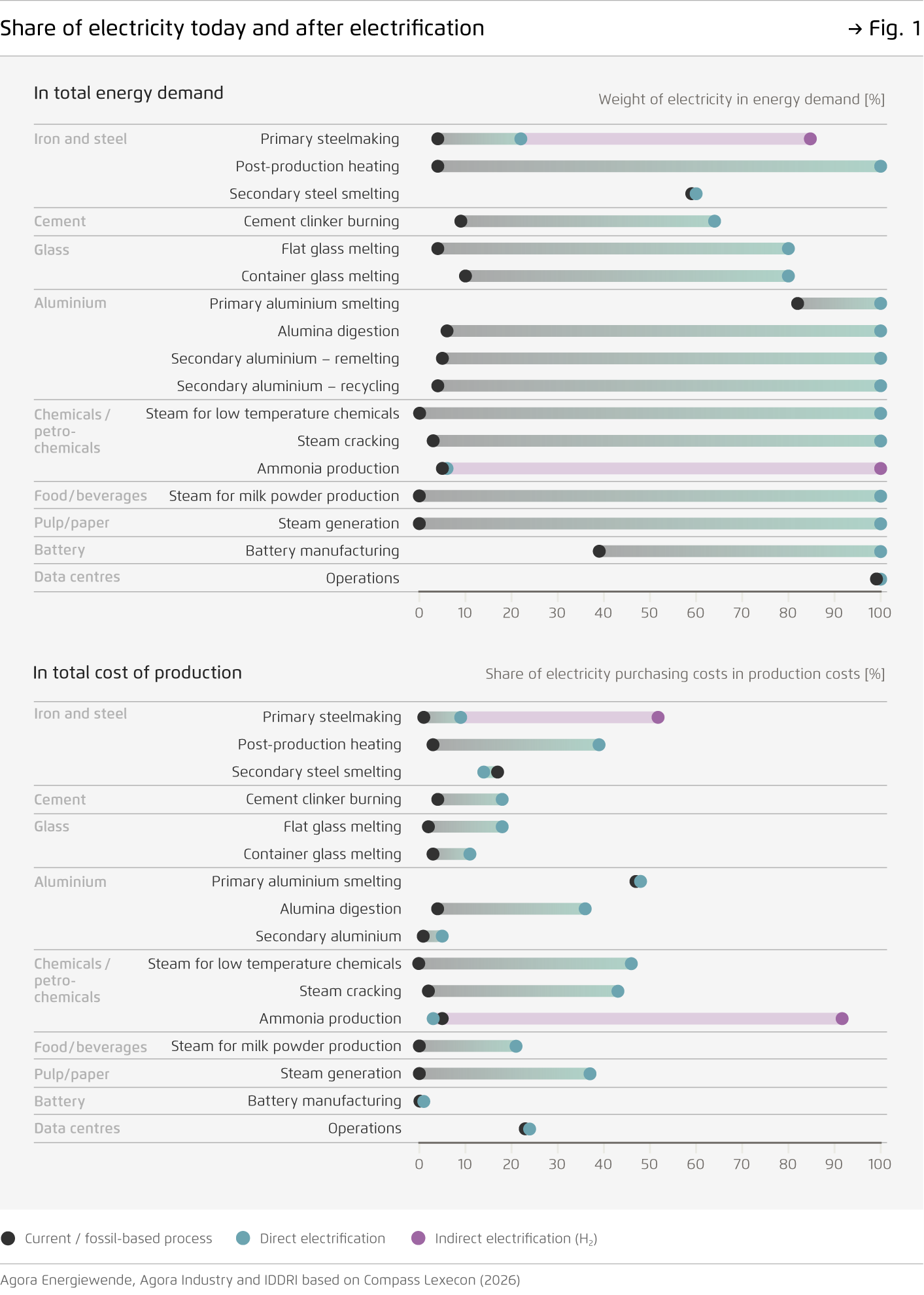
Technologically feasible and in many cases economically viable, electrification will reshape energy consumption, even though large differences among industries will remain. Electricity will directly and indirectly account for 60 to 100 percent of total energy use in most sectors by 2035, with power costs representing 10 to 90 percent of production expenses, depending on the energy intensity of the process.
-
By 2035, decarbonised sectors can be more competitive than today – provided the right conditions are in place.
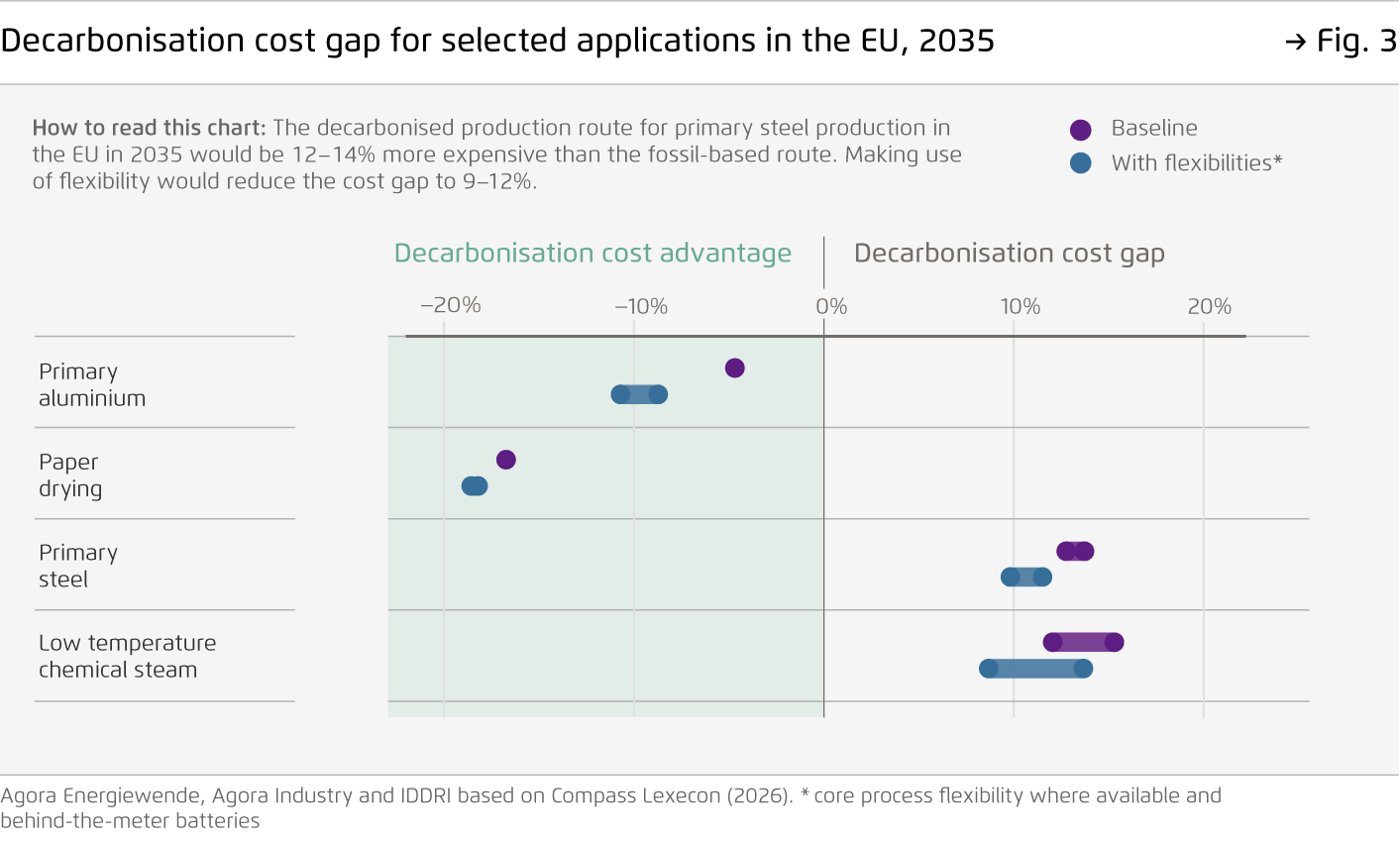
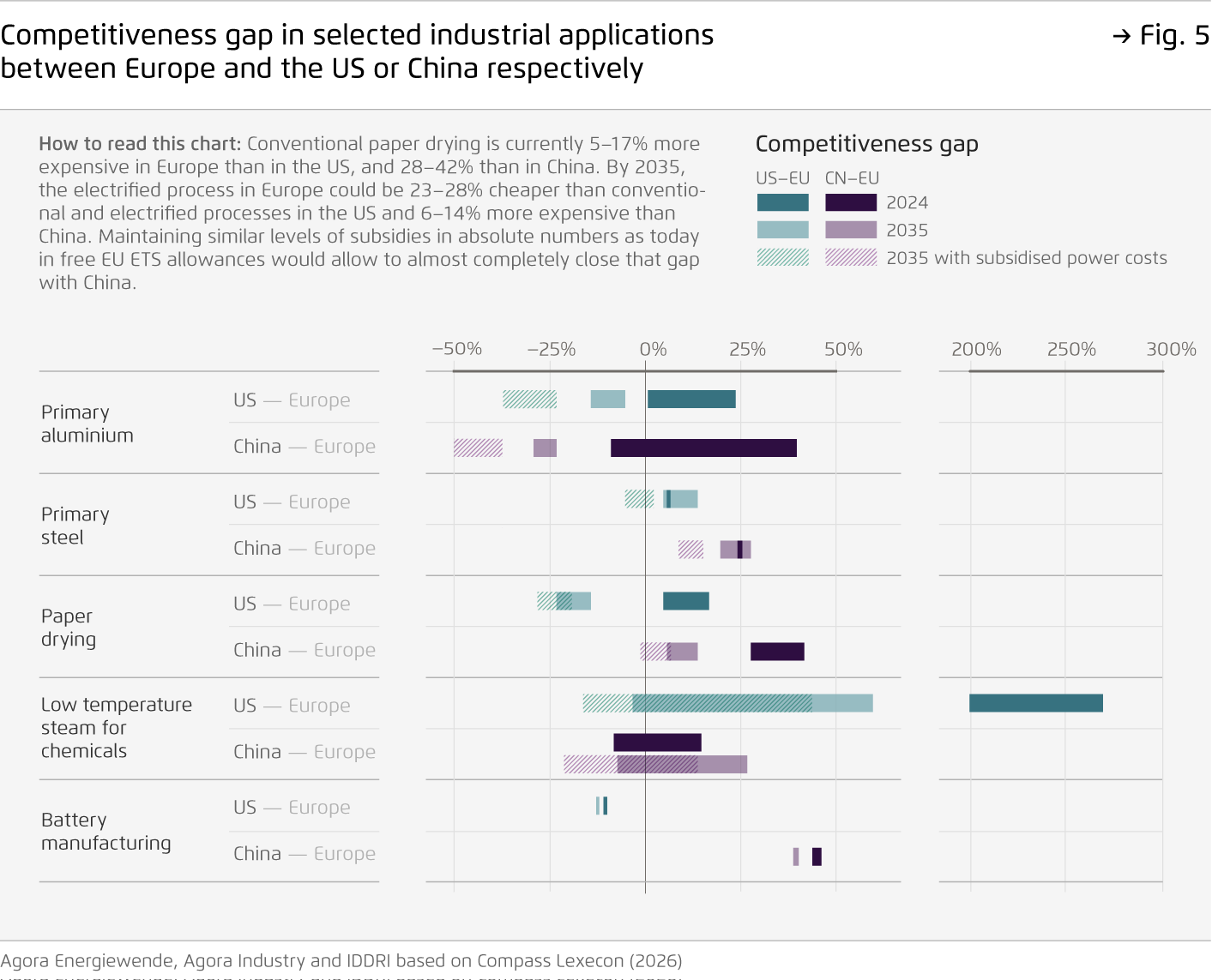
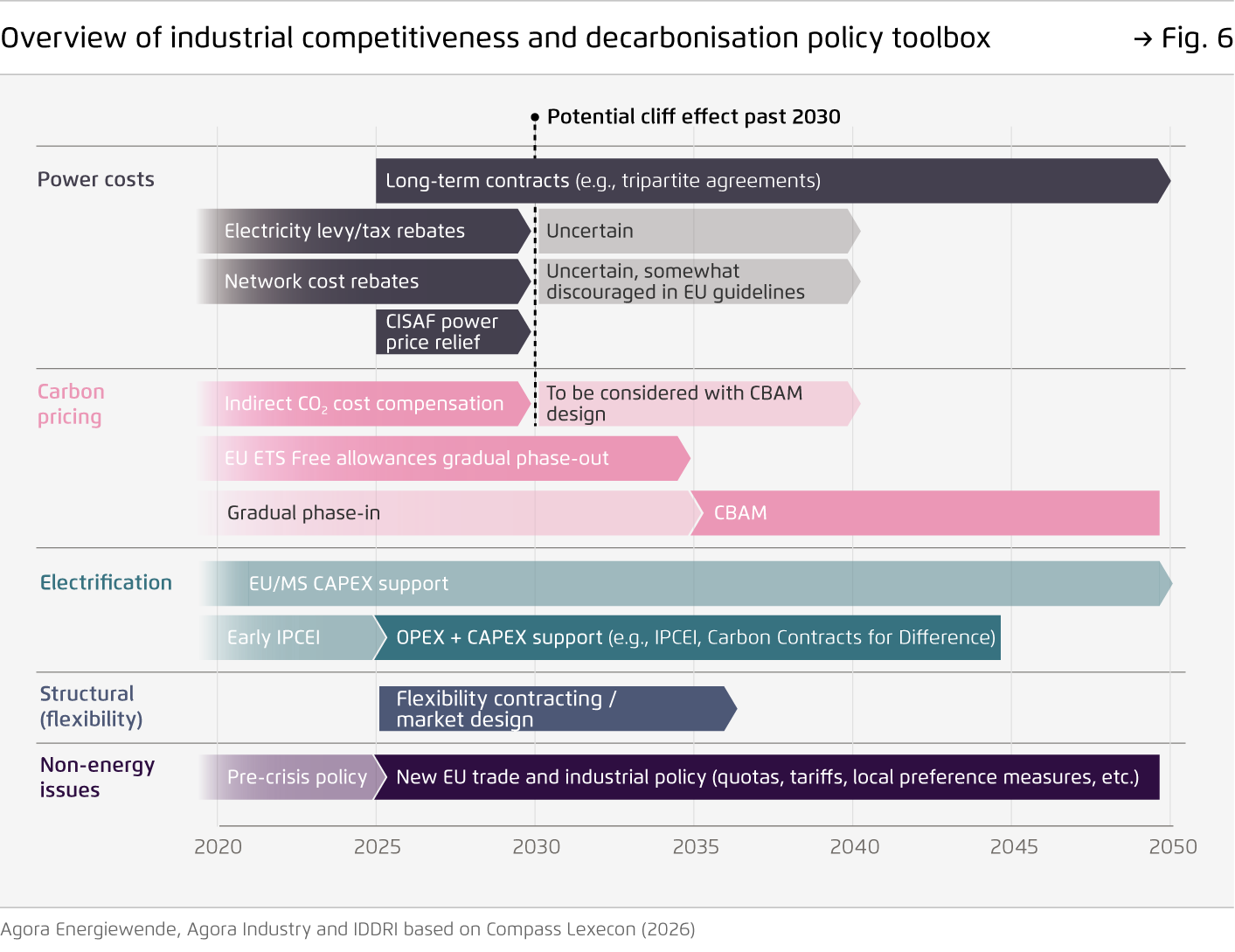
In many cases, like low-temperature heat and primary aluminium, effective carbon pricing through the EU Emissions Trading System (EU ETS) and Carbon Border Adjustment Mechanism (CBAM) could ensure cost-competitiveness. For other sectors, targeted power price support may be needed but should be conditional on clean investment. Across all sectors, further industrial policies will likely be necessary to address non-energy barriers.
-
The EU needs a coherent industrial strategy aligned with energy and climate policy.
To avoid policy fragmentation, the Electrification Action Plan should establish a unified framework to cut power system costs and ensure stable, competitive electricity prices, notably via contracts for difference (CfDs) and power purchase agreements (PPAs). Combining it with carbon pricing and Clean Industrial Deal policies such as lead markets would help build a resilient, climate-neutral European industry.
Powering Europe’s industry
Competitiveness, electrification and the role of electricity prices

Summary
Energy costs are critical for European industrial competitiveness. Today power costs remain low for most industries - typically under 5 percent of production costs - compared to fossil fuel costs that can range from 30 to 80 percent. Europe's reliance on imported fossil fuels exposes vulnerability during energy crises, while decarbonised applications could become more competitive than conventional ones provided the right conditions are in place.
Once electrified, power will account for 60 to 100 percent of total energy use across most sectors, with electricity costs potentially representing 10 to 90 percent of production expenses depending on energy intensity of the process. This transformation offers significant opportunities to strengthen Europe's industrial base through targeted policy measures.
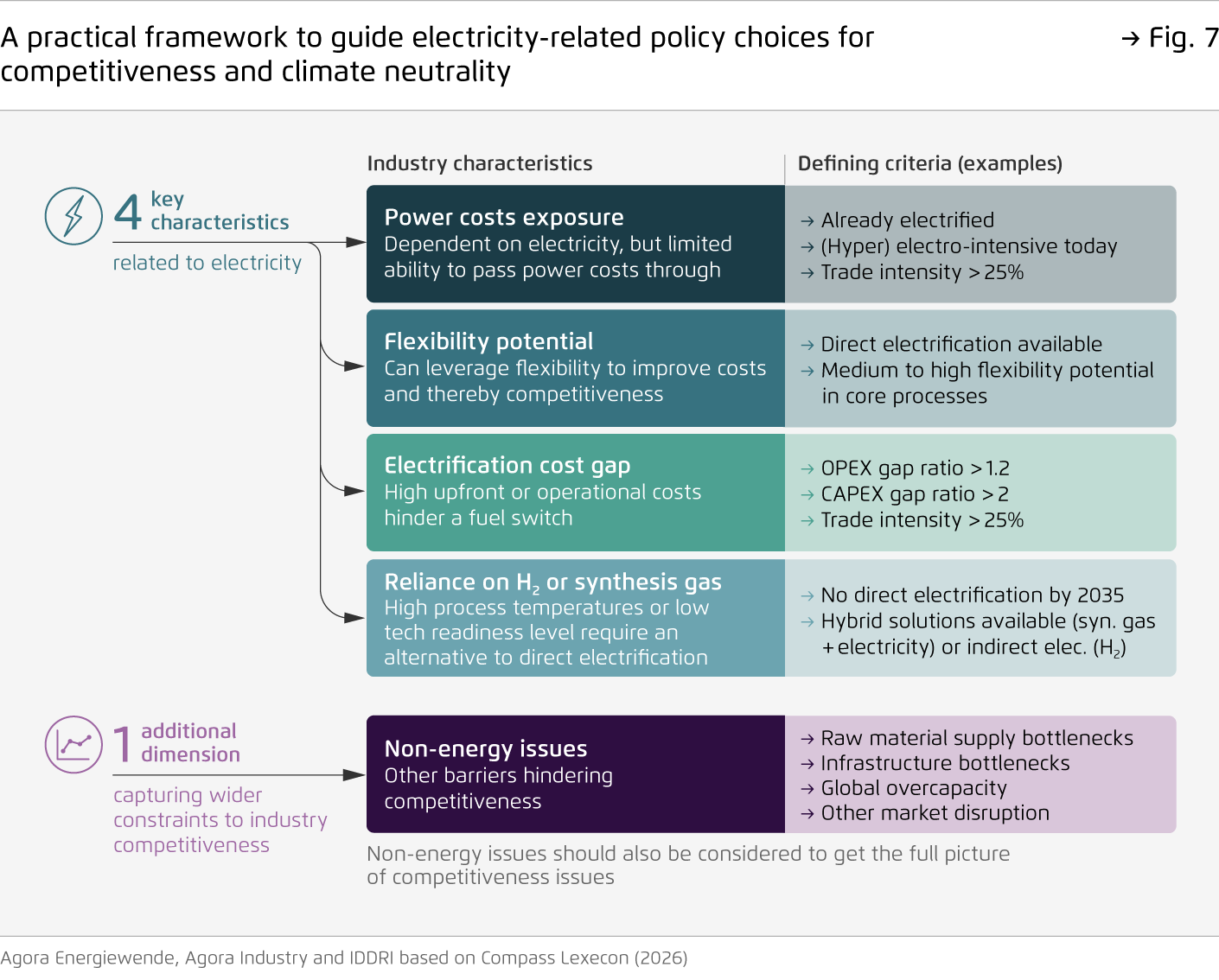
Key initiatives like the Competitiveness Coordination Tool, Electrification Action Plan and Industry Decarbonisation Bank could reduce and stabilise power prices, improve price transparency across Member States, develop harmonised assessment methodologies and enable tailor-made sectoral approaches combining power cost support with non-energy policies such as lead markets.
Key findings
Bibliographical data
Downloads
-
Impulse
pdf 1 MB
Powering Europe’s industry
Competitiveness, electrification and the role of electricity prices
- Technical Analysis pdf 6 MB EU industrial competitiveness: measures to address power sourcing costs whilst fostering decarbonisation
- Summary pdf 4 MB EU industrial competitiveness: measures to address power sourcing costs whilst fostering decarbonisation
- Appendix pdf 3 MB EU industrial competitiveness: measures to address power sourcing costs whilst fostering decarbonisation
All figures in this publication
Share of electricity today and after electrification
Figure 1 from Powering Europe’s industry on page 8

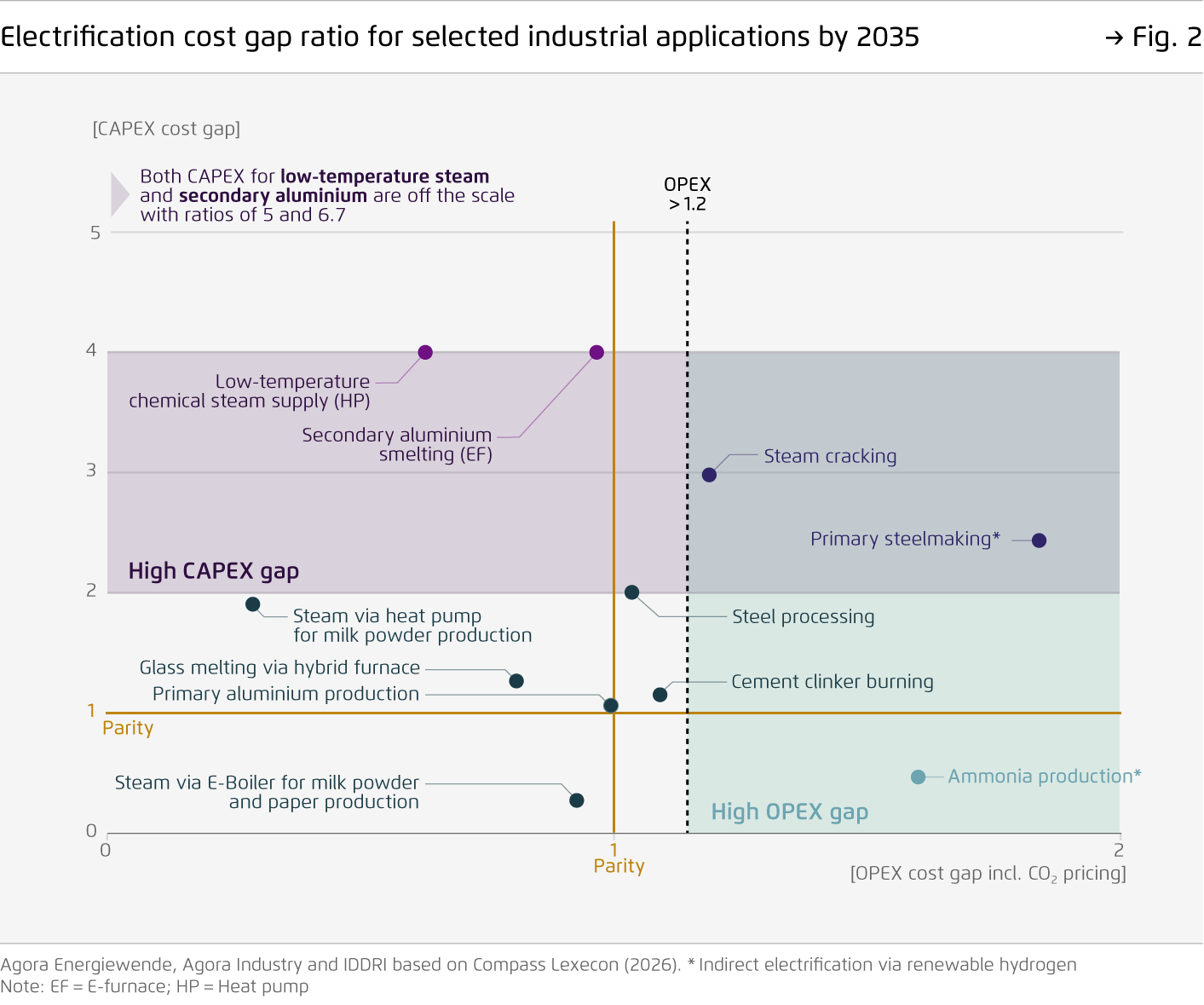
Electrification cost gap ratio for selected industrial applications by 2035
Figure 2 from Powering Europe’s industry on page 10