-
Kazakhstan can significantly expand wind, solar and hydropower to over one third of power generation by 2035, by anchoring flexibility into system development and infrastructure planning.
Generation from these sources excluding large hydropower has already grown significantly, from just 0.1 percent in 2015 to 7 percent in 2025. Sustaining this momentum requires addressing structural constraints on flexibility and ensuring planned thermal power additions – coal, gas and nuclear – are reassessed in light of overall system and infrastructure manoeuvrability needs.
-
A diverse portfolio of power system flexibility solutions is essential to enabling higher shares of variable renewable energy.
The system needs enhanced operational flexibility across conventional generation, combined with demand-side response and backed by improved forecasting and digital tools. Infrastructure development, especially energy storage deployment, national grid modernisation and interconnection with neighboring countries, will provide necessary additional assets to balance variable supply and demand in real time.
-
Flexible coal retrofits are a cost-effective transitional flexibility option to facilitate renewables integration and reduce emissions.
Control system upgrades and operational adjustments, as well as retrofit investments, can improve coal-fired power plants’ responsiveness by reducing minimum load and start-up times and increasing ramp rates. Thermal storage is a relevant solution to decouple heat and power in cogeneration plants. Ensuring these interim measures align with a clear and comprehensive coal phase-out strategy is essential to a sustainable energy transition, particularly given Kazakhstan’s ageing coal fleet with an average lifetime exceeding 50 years.
-
More broadly, strengthened market design and system operation frameworks in Kazakhstan can unlock existing flexibility, while attracting investments in new flexibility solutions at scale.
Further refining current market mechanisms – building on existing arrangements such as the capacity market and the automatic frequency and power control system – would improve remuneration of flexibility services and support investment across generation, storage and demand-side resources.
Kazakhstan's readiness for renewable energy integration at scale
Assessing the role of flexible coal-fired power plants and other flexibility enablers
Summary
This policy brief explores how Kazakhstan can successfully integrate higher shares of renewable energy while maintaining power system reliability and affordability. Drawing on detailed power system modelling and operational analysis, it assesses the flexibility requirements needed to support large-scale deployment of wind, solar and small hydropower as the country accelerates its energy transition.
The analysis finds that renewable energy sources could provide more than one third of Kazakhstan’s electricity generation by 2035 if flexibility becomes a core principle of system planning. Achieving this transition will require a broad portfolio of flexibility solutions, including modernised power grids, energy storage, demand-side response, improved forecasting, stronger regional interconnections and more flexible operation of existing thermal power plants.
The policy brief provides practical recommendations for policymakers, regulators and energy sector stakeholders on how to align infrastructure investment, market design and system operation with the needs of a modern low-carbon power system. It highlights the role of coal plant flexibilisation as a temporary transition measure while underscoring the importance of a long-term coal phase-out strategy, helping Kazakhstan build a more resilient, secure and renewable-based electricity system.
Key findings
Bibliographical data
Downloads
-
Policy Brief
pdf 489 KB
Kazakhstan's readiness for renewable energy integration at scale
Assessing the role of flexible coal-fired power plants and other flexibility enablers
-
Аналитическая записка
pdf 617 KB
Готовность Казахстана к масштабной интеграции возобновляемых источников энергии
Потенциальная роль маневренных угольных электростанций и других инструментов обеспечения гибкости
All figures in this publication
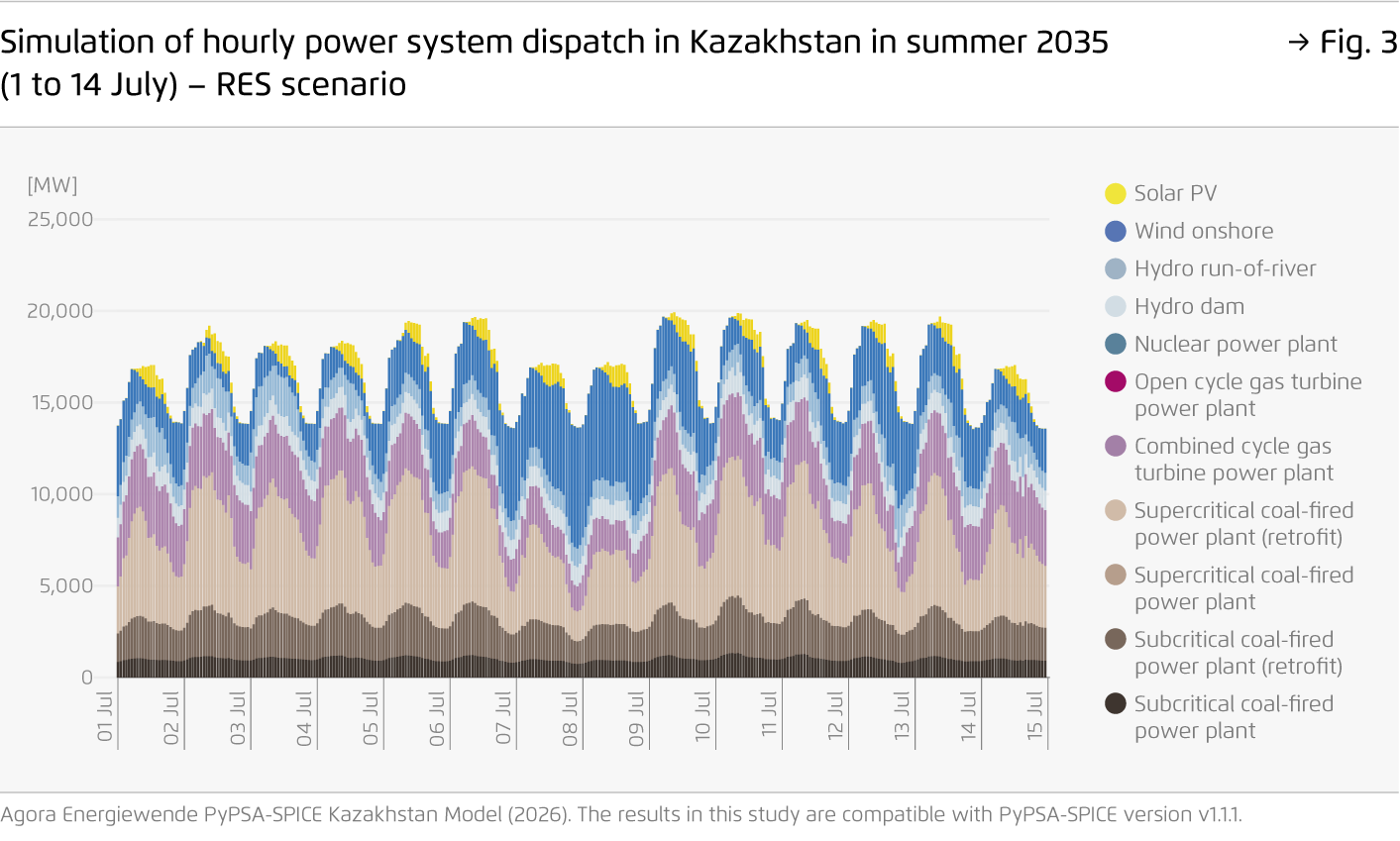
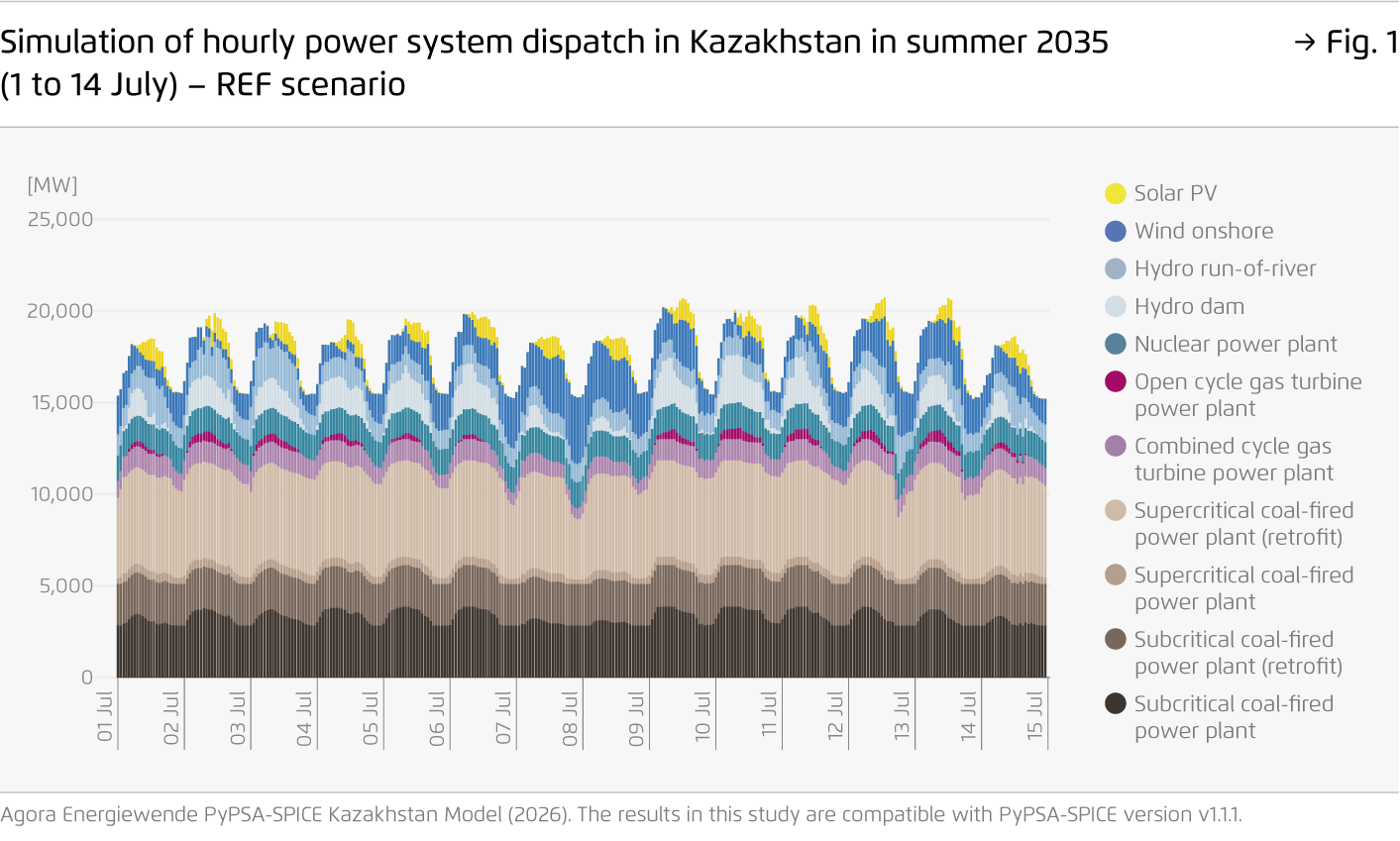
Simulation of hourly power system dispatch in Kazakhstan in summer 2035 (1 to 14 July) – REF scenario
Figure 1 from Kazakhstan's readiness for renewable energy integration at scale on page 5
Share:

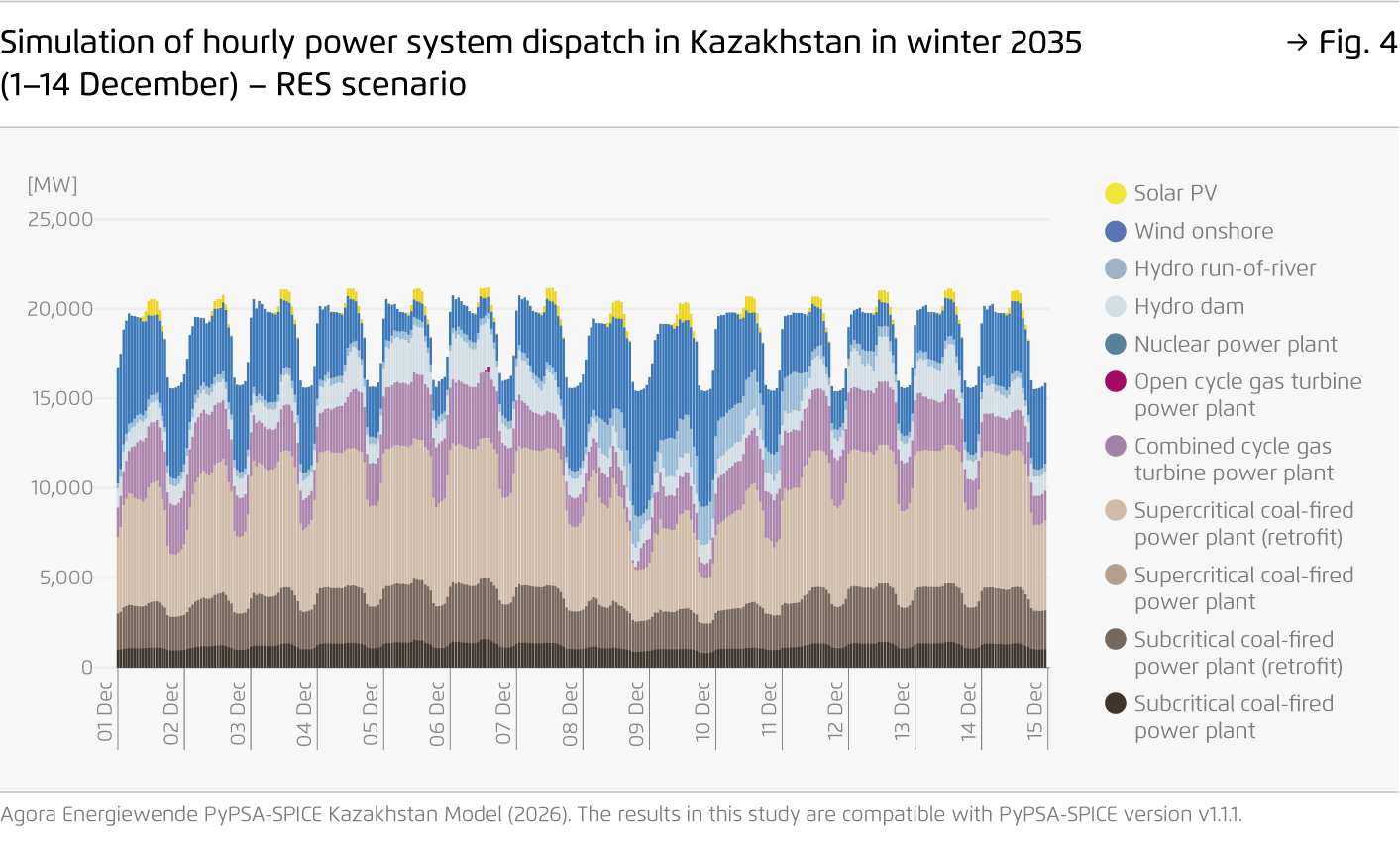
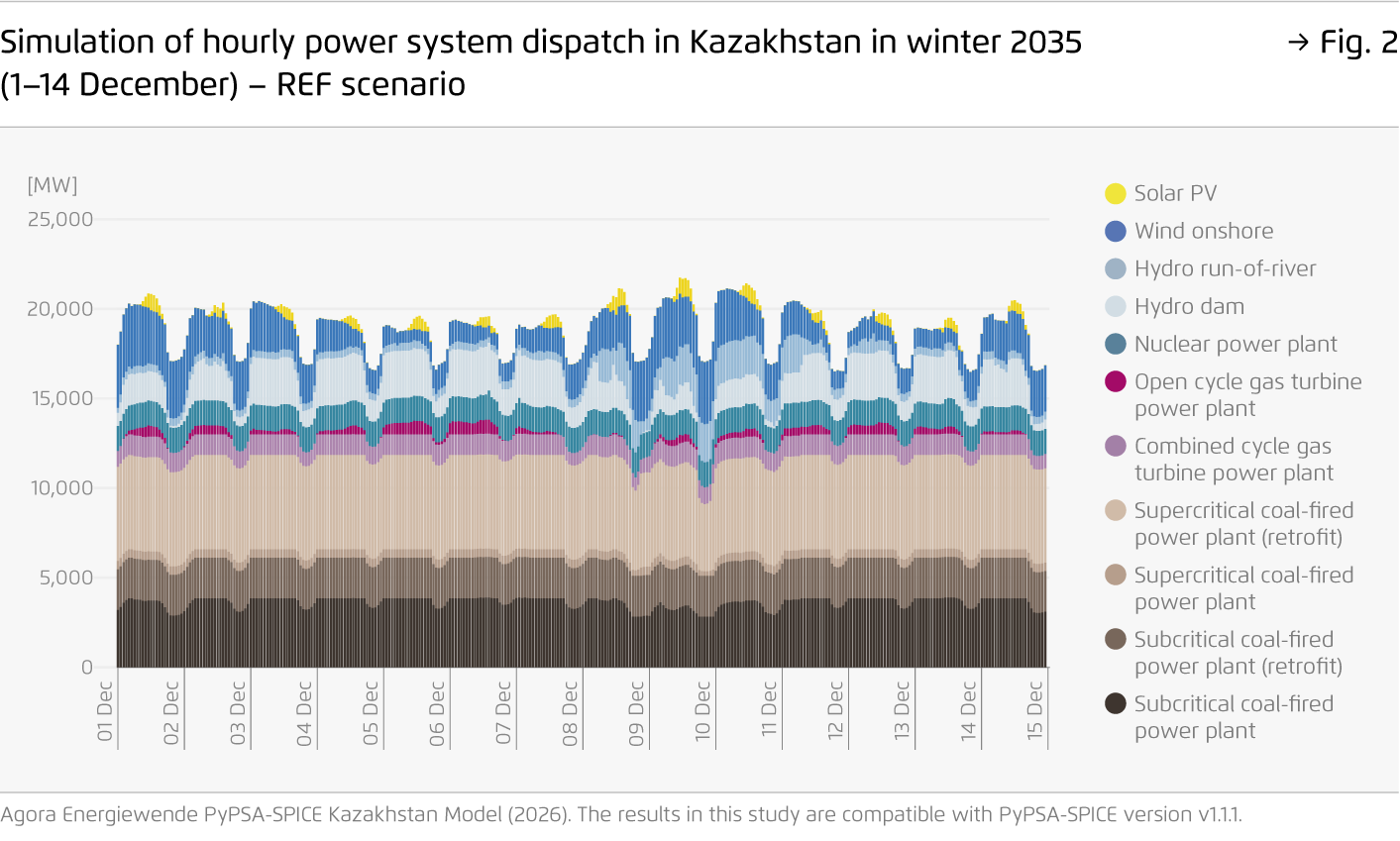
Simulation of hourly power system dispatch in Kazakhstan in winter 2035 (1–14 December) – REF scenario
Figure 2 from Kazakhstan's readiness for renewable energy integration at scale on page 6
Share: