-
Clean heating is a chance to lower energy bills, improve home comfort and cut emissions, but it must be available for everyone.
Targeted measures are necessary to help vulnerable households overcome financial and technical barriers to installing heat pumps and thus shield them against imported fossil fuel prices. This would make the transition to clean heating socially just and by reducing emissions help keep the upcoming carbon price for buildings and transport (ETS2) in check.
-
Inspired by social leasing for electric vehicles in France, similar financing schemes for heat pumps would be a smart way to invest ETS2 revenues.
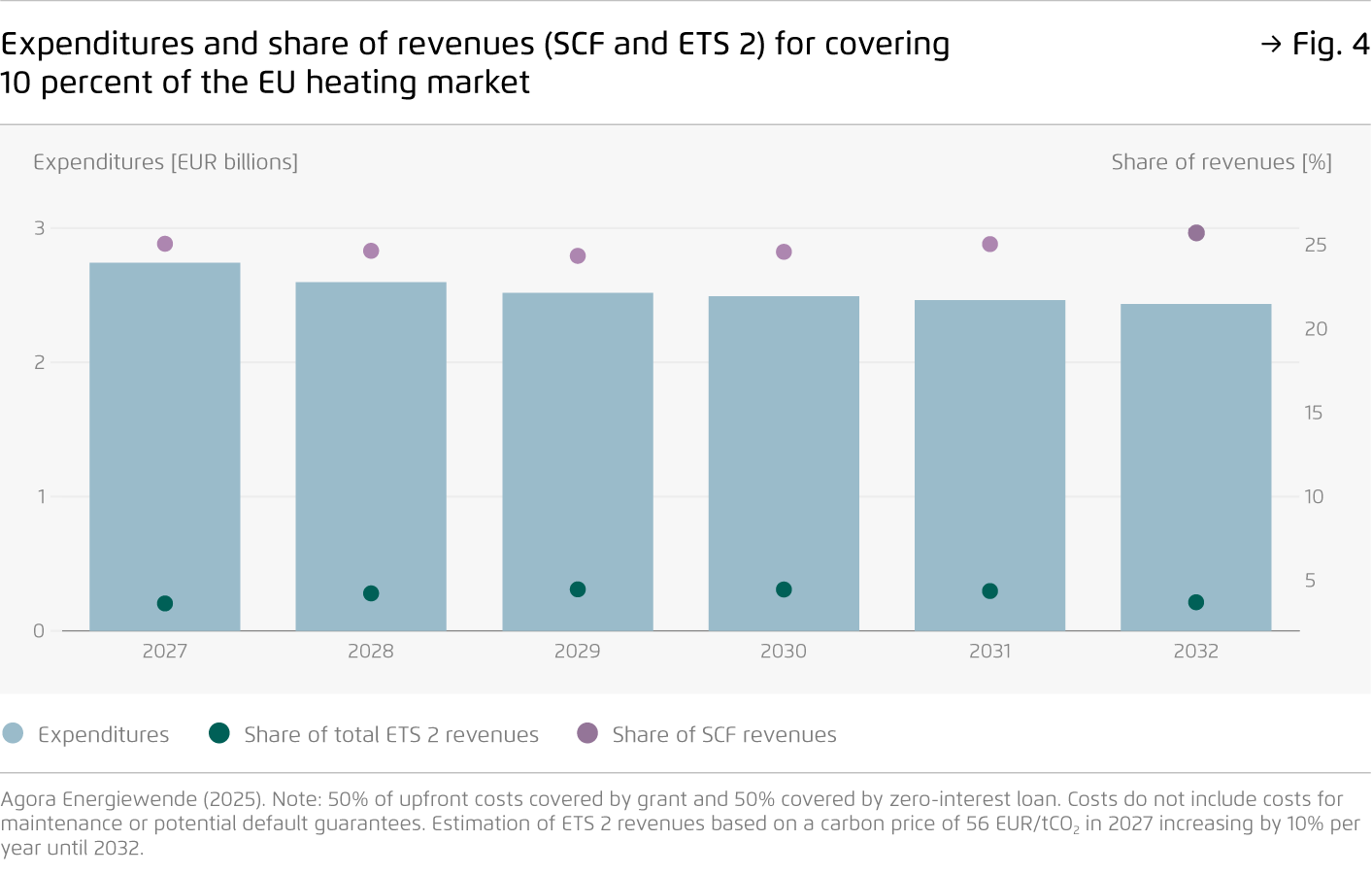
Longer investment cycles make such an instrument even more cost-effective than similar schemes for cars. Over the first years of its implementation, less than five percent of ETS2 funds would allow supporting 10 percent of all expected heating installations in the EU. With ETS2 delayed, frontloading revenues is a key opportunity for an early roll-out of social financing schemes.
-
Collaboration among suppliers, banks and governments would enable an innovative form of support which could significantly increase vulnerable households’ trust in and access to clean heating.
Governments, together with heat pump suppliers and banks, would make sure households get heating appliances and related services for an affordable monthly rate under simple terms. Suppliers would commit to competitive prices, transparent conditions and certified installations.
-
By unlocking additional heat pump demand, social financing schemes would help scale European cleantech manufacturing.
They could incentivise manufacturers and installers to develop more accessible business models beyond vulnerable households. This would further strengthen the competitiveness of existing clean heat value chains, contributing to the objectives of the EU Clean Industrial Deal. The upcoming Heating and Cooling Strategy and the Electrification Action Plan are key opportunities for advancing this policy on the European level.
Clean heat for all
Integrating the concept of social leasing into heat pump support schemes
Summary
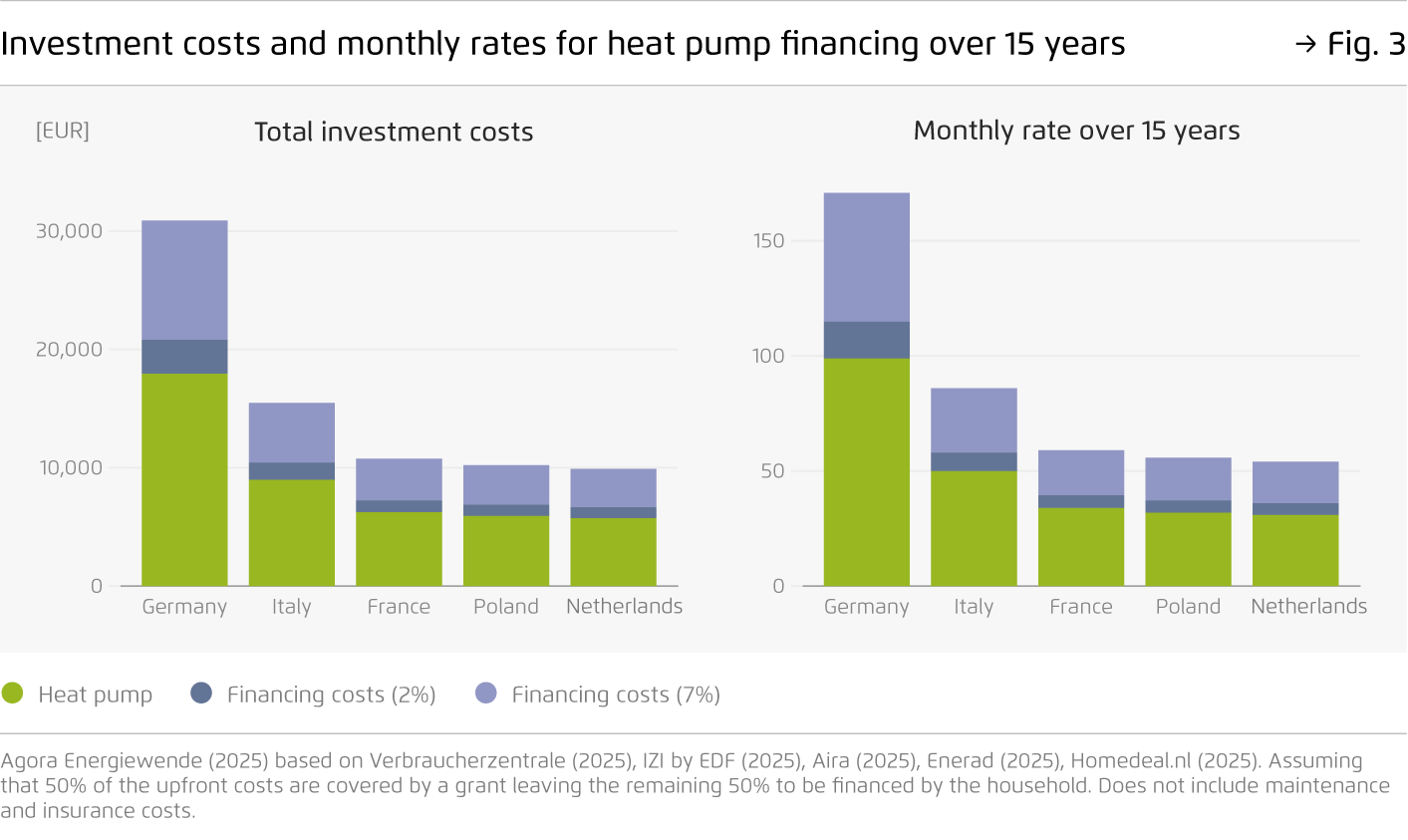
Transitioning to clean heating is essential for Europe to reduce fossil fuel dependencies while also offering great potential to cut households’ energy bills. Despite existing subsidy programmes, this transition is often still prevented by upfront costs being too high for vulnerable households to install a heat pump. This analysis investigates how a combination of government grants, low-interest loans, and technical assistance similar to the social leasing of electric vehicles could address these barriers.
The results show that these social financing schemes could fund 500,000 heat pump installations per year with public expenditures of around 2.5 billion euros. This would be less than 5 percent of the projected annual revenues of the new carbon price for buildings and road transport (“ETS2”). Therefore, this instrument offers the possibility of addressing a significant number of households while also providing a considerable boost for Europe’s clean heat value chains as more people make the switch.
Key findings
Bibliographical data
Downloads
-
Policy Brief
pdf 377 KB
Clean heat for all
Integrating the concept of social leasing into heat pump support schemes
All figures in this publication
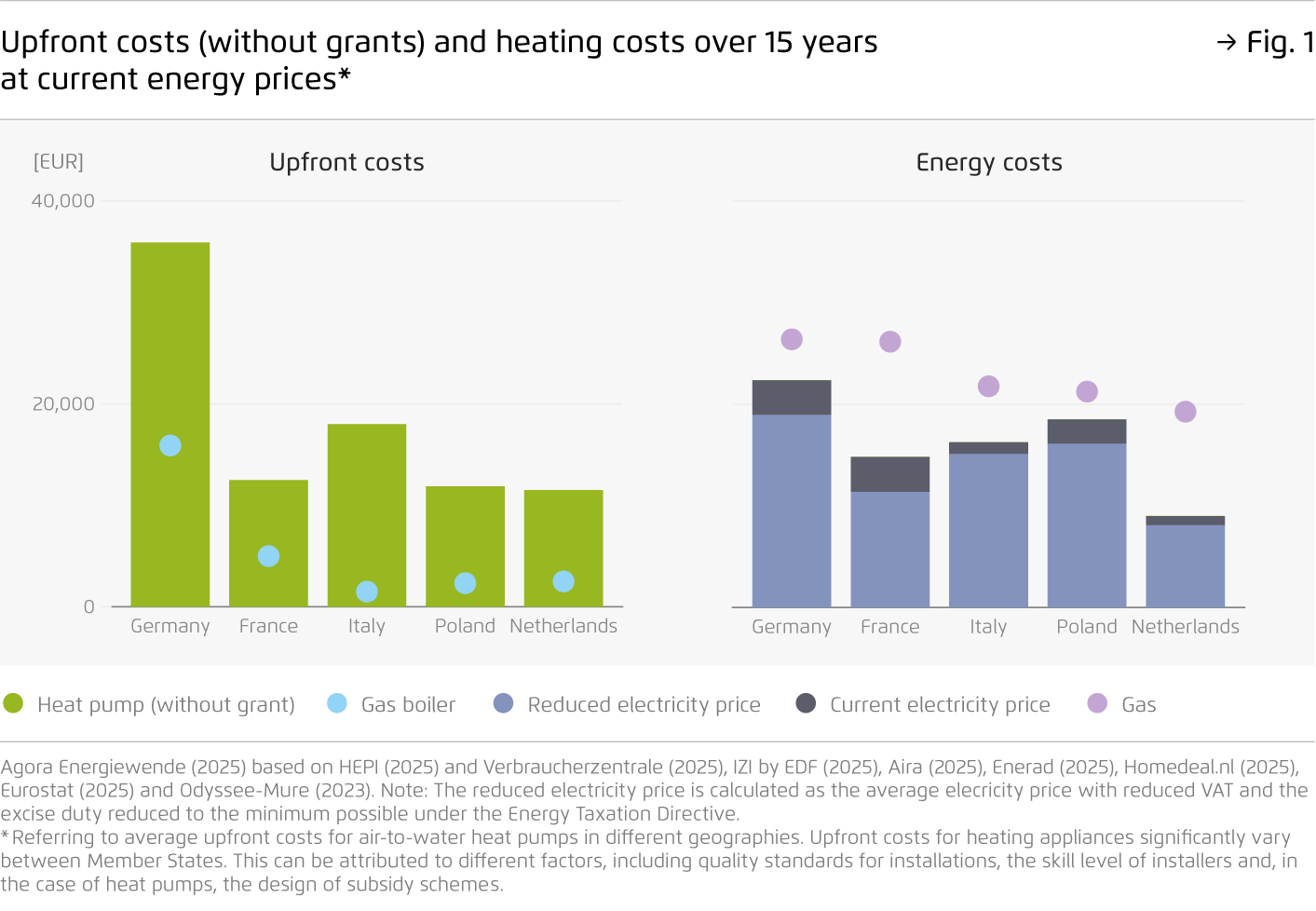
Upfront costs (without grants) and heating costs over 15 years at current energy prices*
Figure 1 from Clean heat for all on page 9

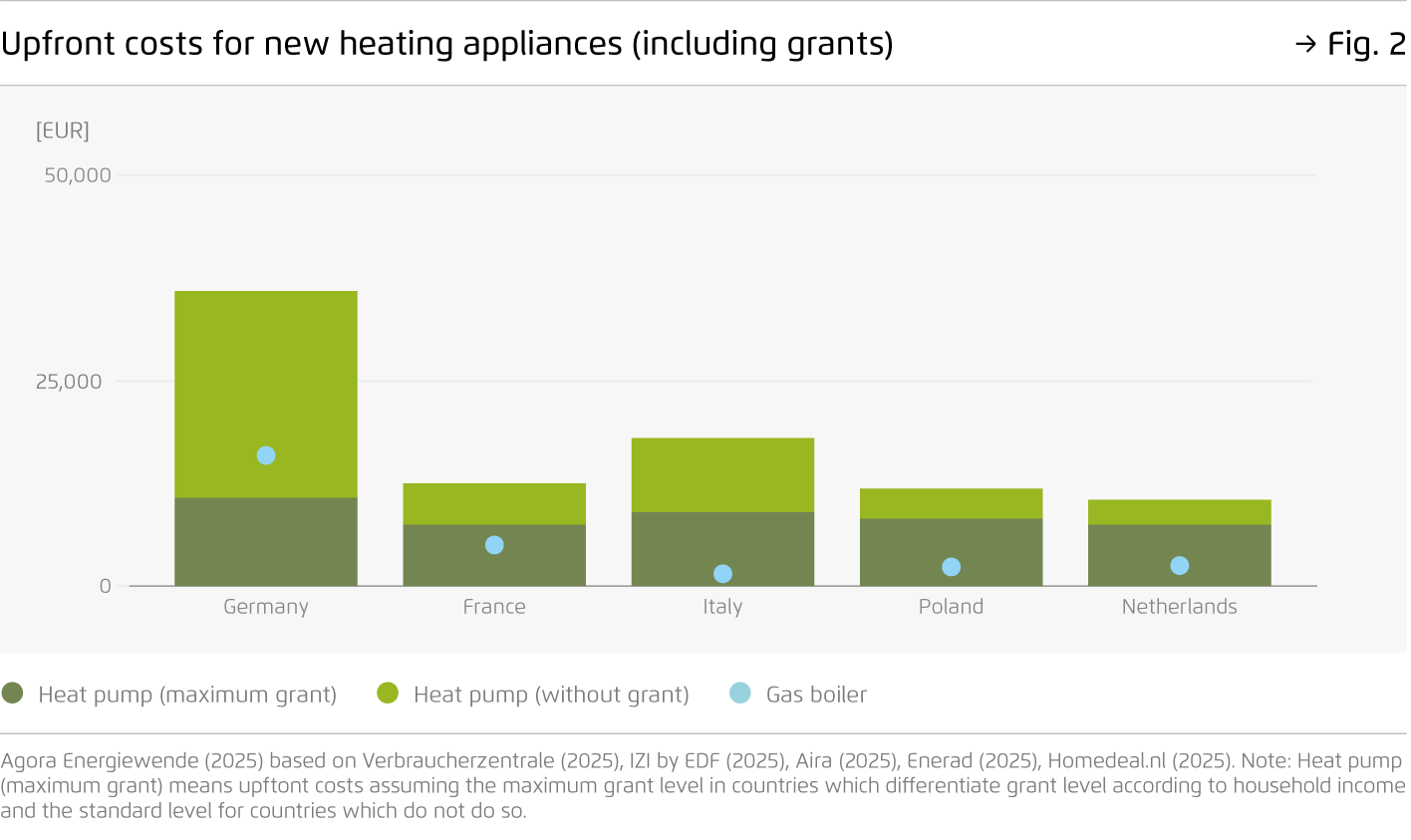
Upfront costs for new heating appliances (including grants)
Figure 2 from Clean heat for all on page 10