Investing EU carbon revenues in affordable clean heating for all
Social financing would expand access to heat pumps for vulnerable households, shielding them from volatile fossil fuel prices, a new Agora Energiewende brief shows. Once the EU carbon pricing for buildings and transport (ETS2) starts, less than five percent of revenues could support around 500,000 installations per year. With ETS2 delayed, frontloading those revenues is a key opportunity for an early roll-out of such support schemes.
Brussels, 18 December 2025. As the European Union advances its clean heat transition, many households still have difficulties making the switch to heat pumps due to high upfront costs, limited access to finance and a shortage of qualified installers. A new Agora Energiewende policy brief shows how social financing schemes, backed by revenues from the forthcoming carbon pricing system for buildings and transport (ETS2) and the Social Climate Fund (SCF), can make clean heating accessible and affordable for everyone.
While the EU plans to delay the ETS2 by one year to 2028, emissions must still fall at the same pace – but without a functioning carbon market. This makes prompt action even more urgent, the think tank notes. Early auctions and frontloading future ETS2 and SCF revenues would make it possible to unlock the funds needed for social financing schemes as early as 2026 and 2027.
“With ETS2 reforms on the table and gas prices expected to decline, the next few years offer a unique window to help vulnerable households switch to clean heating before the carbon price starts to bite. Social leasing-style financing schemes can turn carbon pricing into tangible social benefits and cut exposure to volatile fossil fuel prices,” said Émeline Spire, Co-Director Europe, Agora Energiewende.
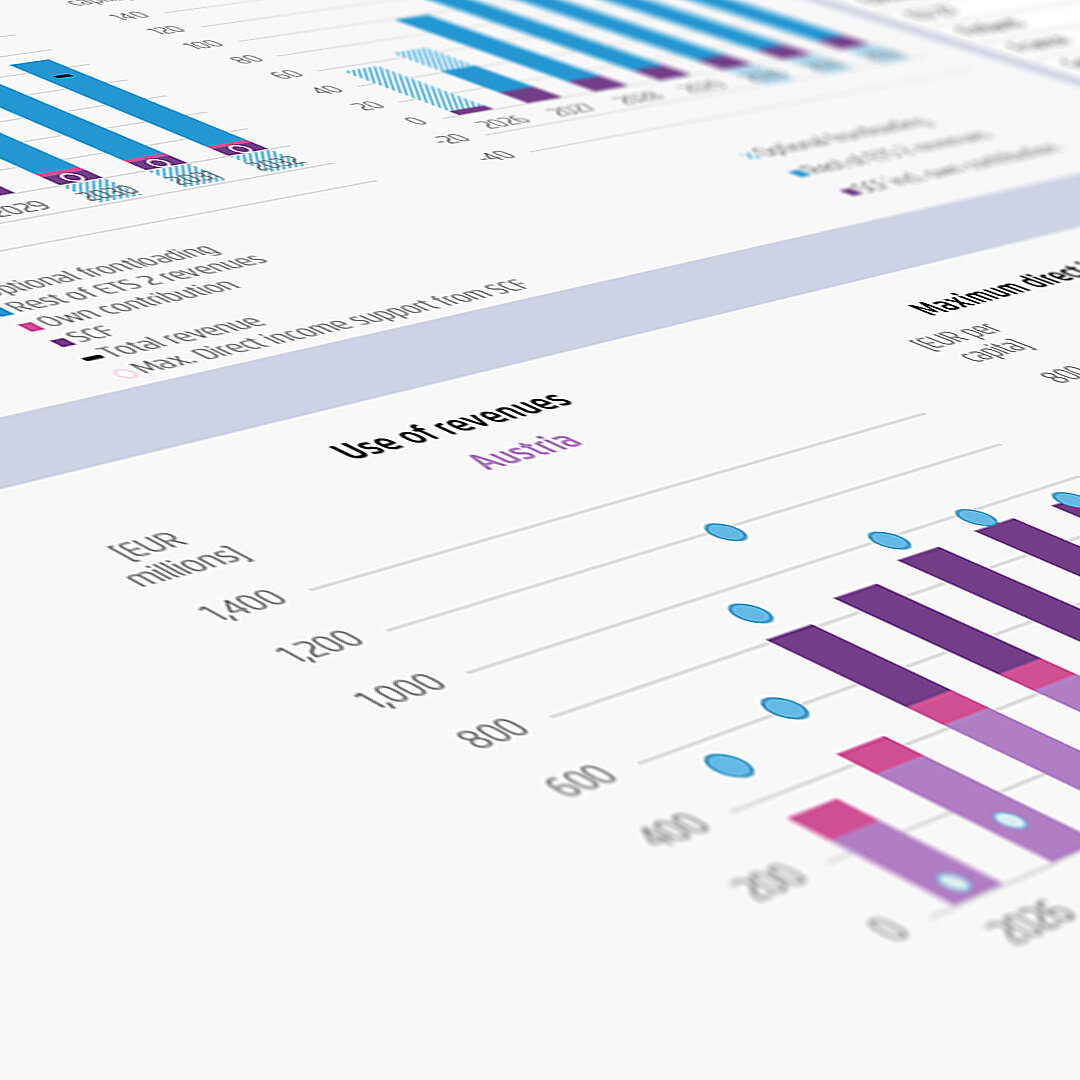
An accompanying interactive tool estimates the ETS2 and SCF revenues per country until 2032 under different price scenarios and compares the costs of measures such as social financing schemes and direct income support. The brief and tool show that social financing schemes could support around 500,000 heat pump installations per year. Over ETS2’s first four to five years, this would use less than five percent of total proceeds and cover about ten percent of expected heating system replacements.
Social financing: a model to make clean heat affordable and accessible
Existing clean heat support programmes – including grants and tax incentives – tend to favour homeowners who can pre-finance installations or secure loans. With ETS2 set to take effect in the coming years, fossil heating costs are expected to gradually rise compared to non-fossil alternatives, strengthening incentives for clean technologies but also increasing pressure on vulnerable households.
Agora’s proposal for a social financing model for heat pumps is inspired by the social leasing programme successfully applied to electric vehicles in France. Such a model would target lower- and middle-income households and consist of 50 percent government grants and 50 percent low-interest loans. Collaboration among suppliers, banks and governments would enable an innovative form of support. Households would pay a fixed monthly rate instead of a large upfront investment, with government support keeping those monthly payments affordable. In contrast to traditional leasing models, ownership would be transferred to the households who would pay back a low-interest loan for the part of the upfront costs not covered by government grants. Meanwhile, maintenance, warranties and energy audits would ensure reliability and sustained savings.
“By keeping things simple – for example through affordable fixed monthly payment and guaranteed high-standard installations – social financing schemes could significantly increase people’s trust in clean heating. To smoothen the introduction of ETS2, helping households that still heat with coal to help make the switch should be a priority,” said Spire.
According to Agora, one option to explore would be to link social financing schemes with the “One-stop shops” for building renovations that EU governments are required to establish at the local level under the revised Energy Performance of Buildings Directive (EPBD). These facilities would coordinate energy audits, installer services, subsidy applications and financing. Ireland’s experience illustrates their potential: since the introduction of such One-stop shops, the number of deep renovations has more than doubled.
Boosting Europe’s cleantech manufacturing
By unlocking additional demand for heat pumps, well-designed social financing schemes can create a more predictable market that helps scale up European cleantech manufacturing and installation capacity, the authors note.
Stable demand signals would encourage manufacturers and installers to roll out more accessible business models that extend beyond vulnerable households. This, in turn, would reinforce the competitiveness and resilience of Europe’s clean heat value chains and support the objectives of the EU Clean Industrial Deal.
“Making clean heating affordable is also a chance to strengthen Europe’s clean heat industries. Governments should thus move fast, working with banks and suppliers to build these programmes. The Commission can accelerate progress by coordinating and sharing best practice, and by using the upcoming Heating and Cooling Strategy to provide a clear long-term direction for national action,” Spire noted.
Strong safeguards and a framework for fair implementation
Robust consumer protection, for example transparent information about the composition of financing rates, alongside clear eligibility criteria for participating households are essential for the success of social financing. Such schemes must furthermore ensure that participating households experience genuine reductions in energy bills – for example through mandatory energy audits. Installations must also meet strict quality and performance standards which can be achieved by relying on qualified installers only.
Ensuring a fair and inclusive heat transition will require coordination across policy, finance and implementation. Social financing schemes offer a practical way for governments to align climate ambition with social equity. Looking ahead, integrating these approaches within a wider framework of housing and energy policy will be key – ensuring reliable, affordable and sustainable energy services for all households, the paper concludes.
The 24-page policy brief Clean heat for all: Integrating the concept of social financing into heat pump support schemes and the accompanying ETS2 revenue simulation tool are available for free download from our website.