-
Biomass is a limited yet strategic resource for reaching Europe’s resilience, competitiveness and climate objectives.
However, its current use is suboptimal: it is predominantly directed towards energy applications where mature and efficient alternatives already exist, while material uses remain limited. Shifting the regulatory and financial incentives so that they encourage higher-value material uses of biomass is essential to maximise its long-term contribution
-
By 2050, the role of biomass could shift decisively from energy production towards material uses.
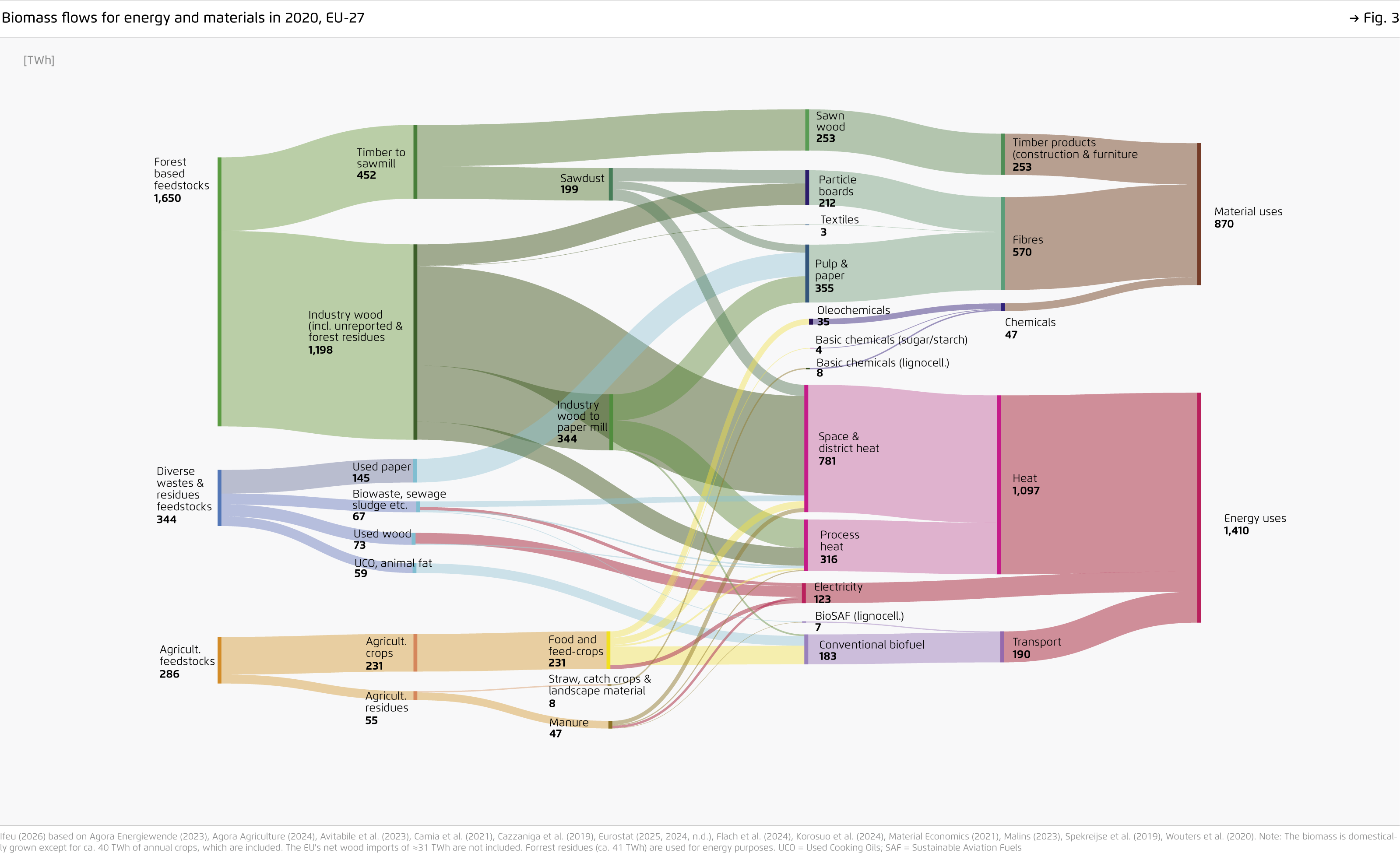
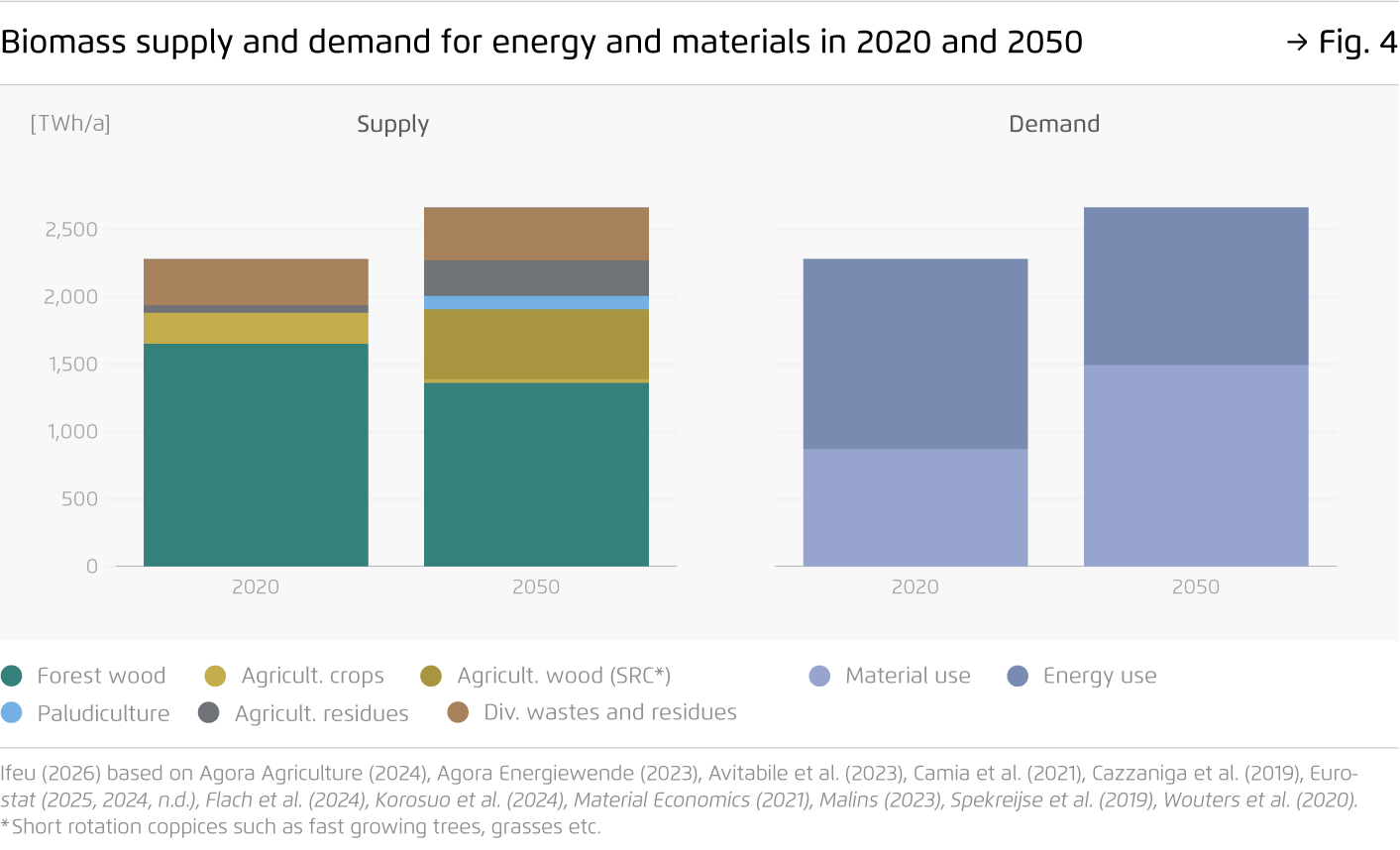
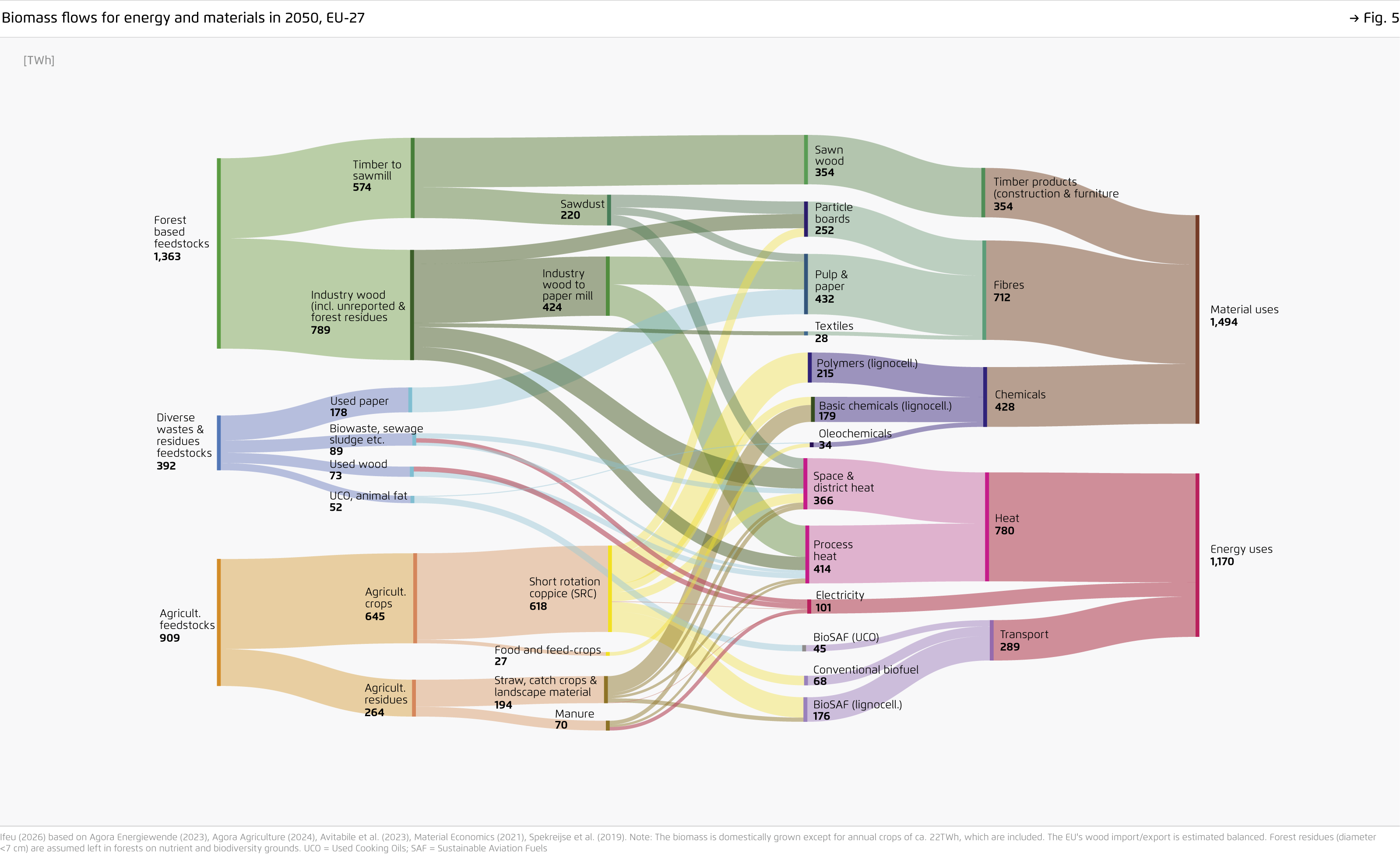
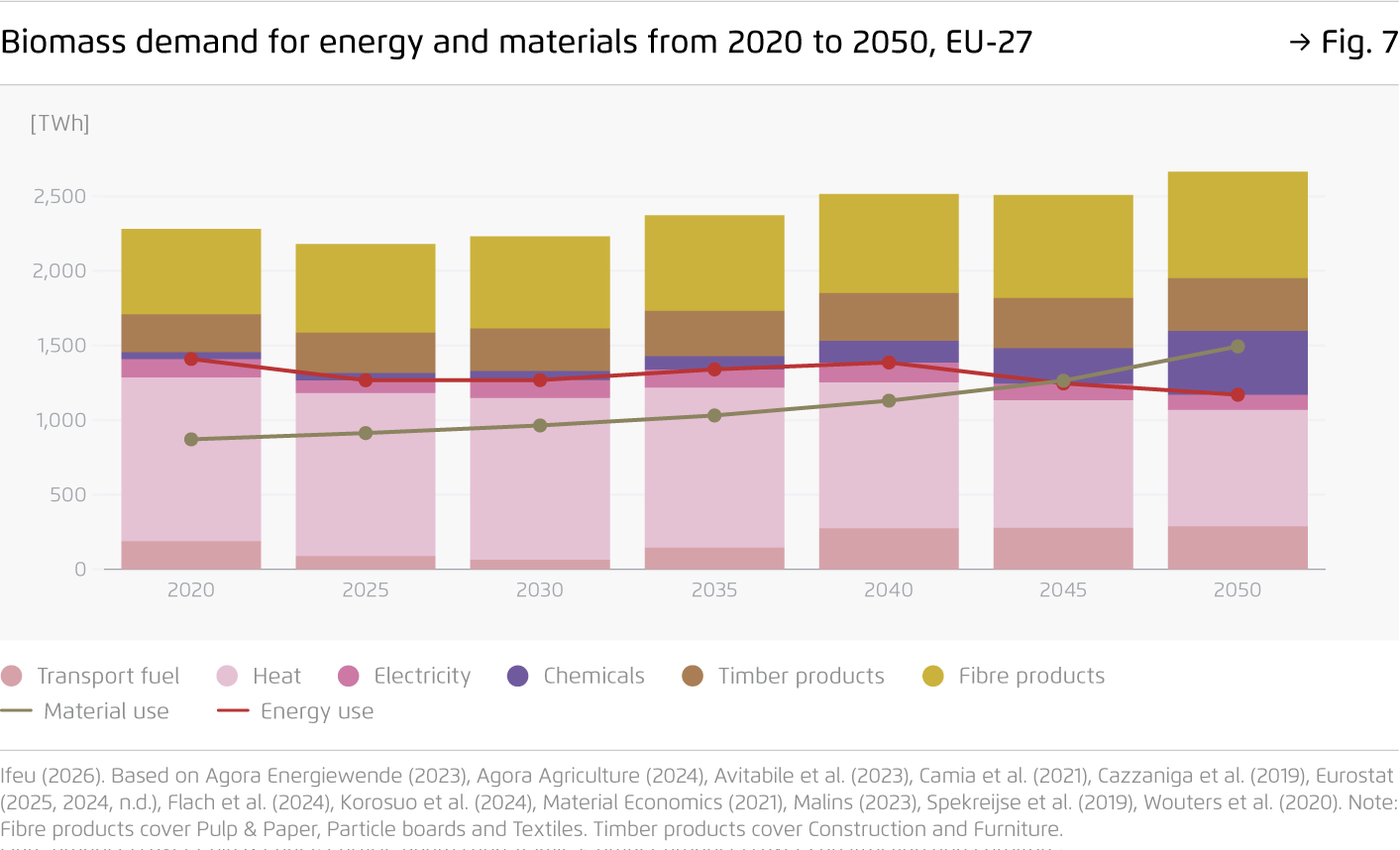
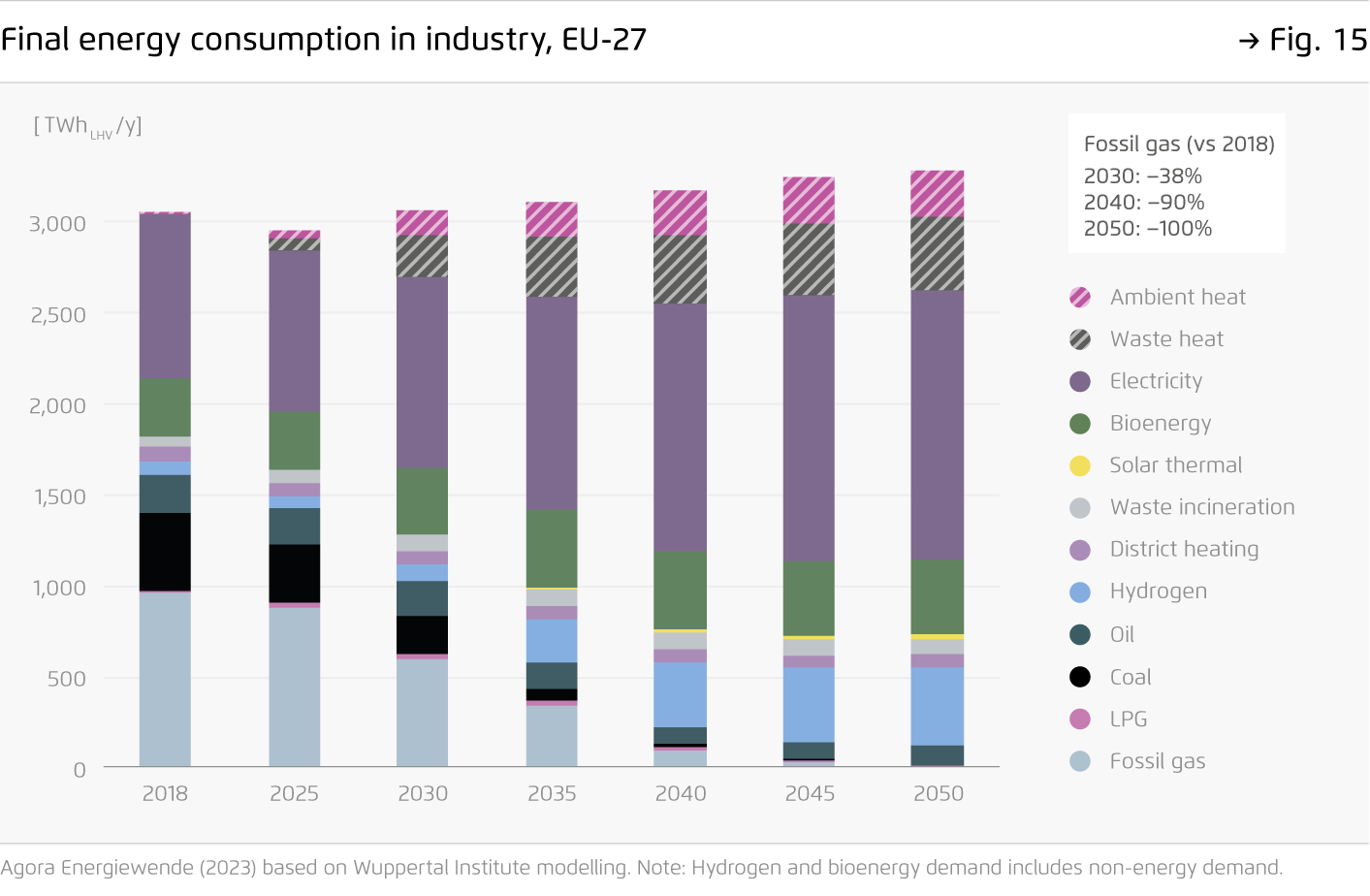
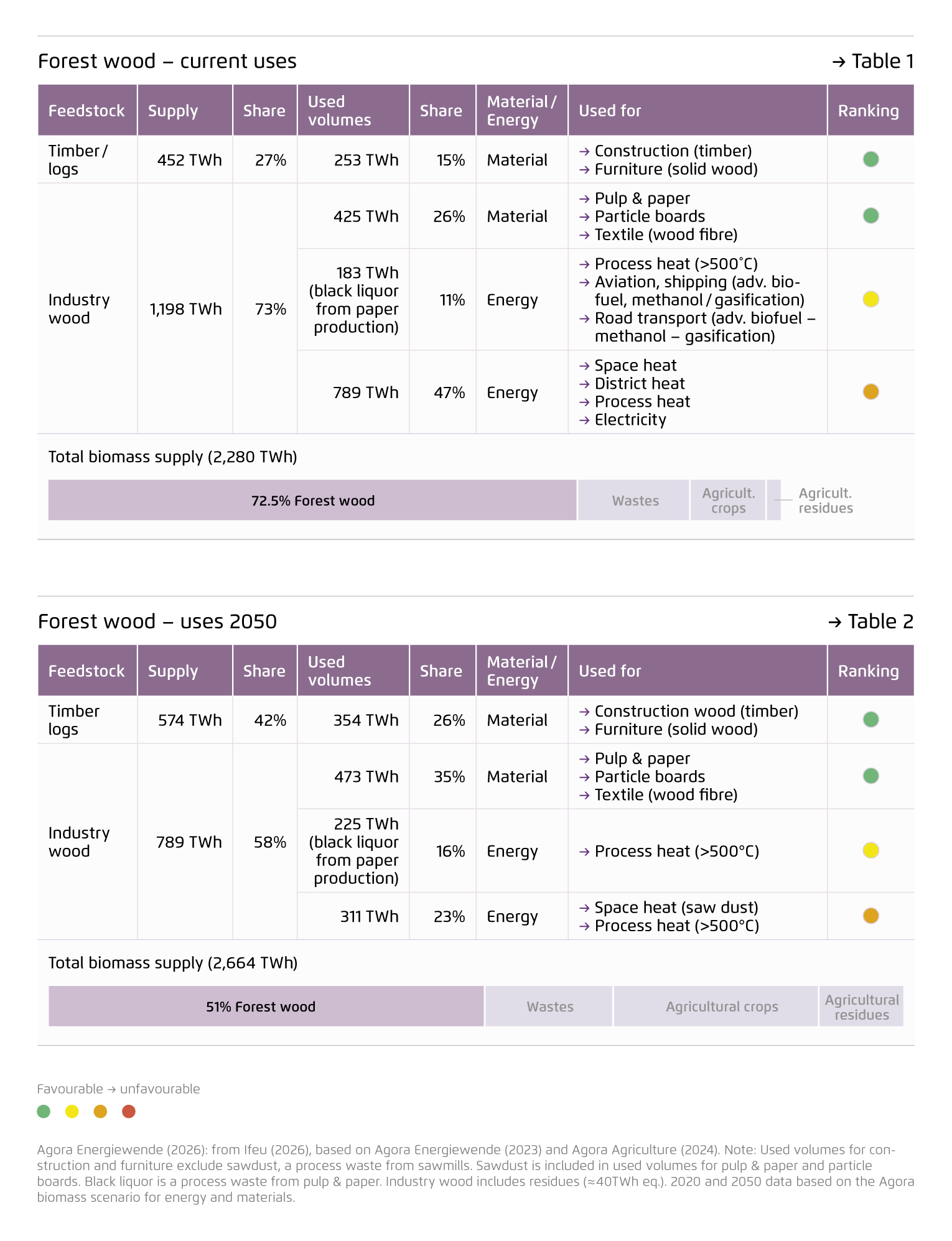
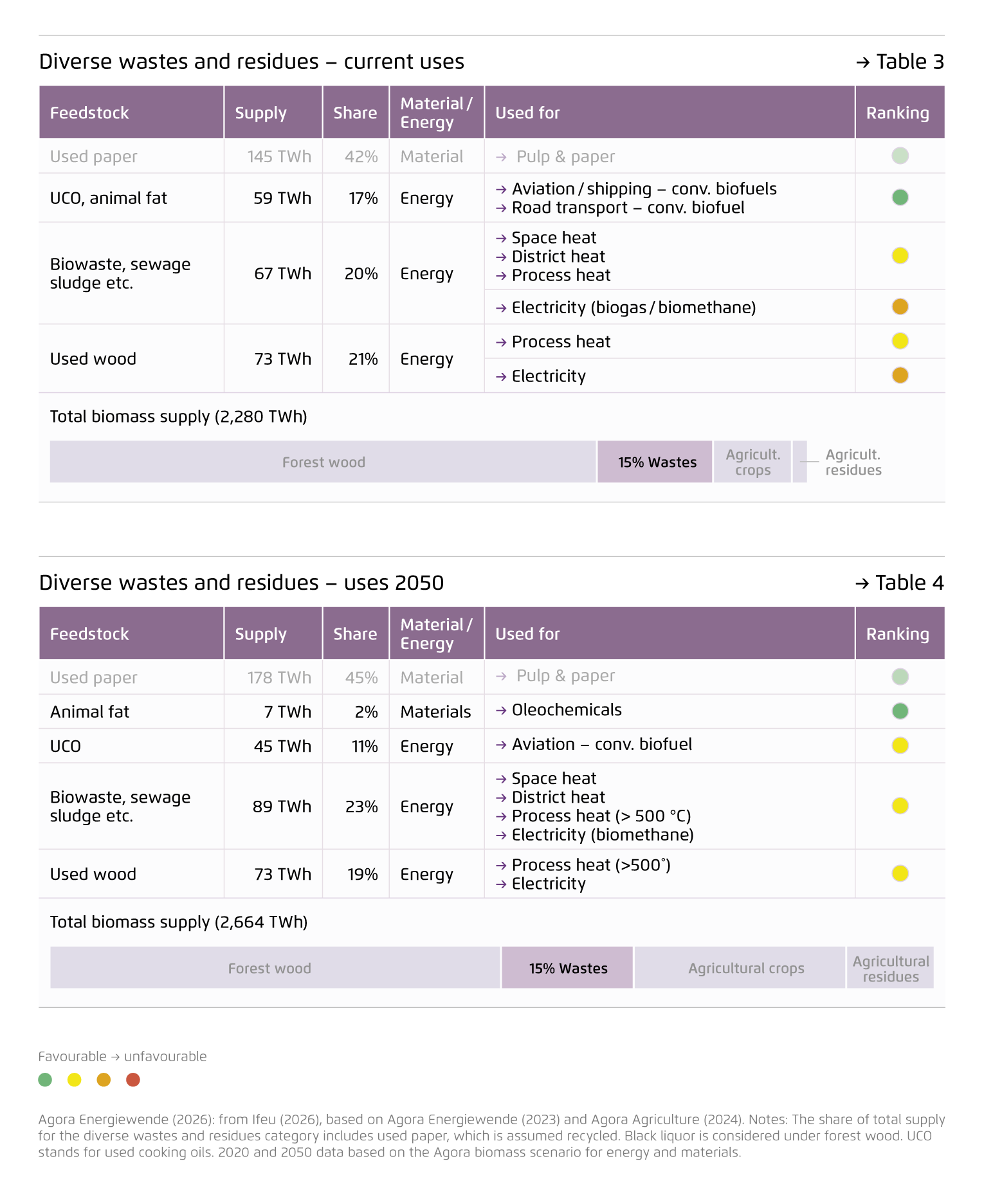
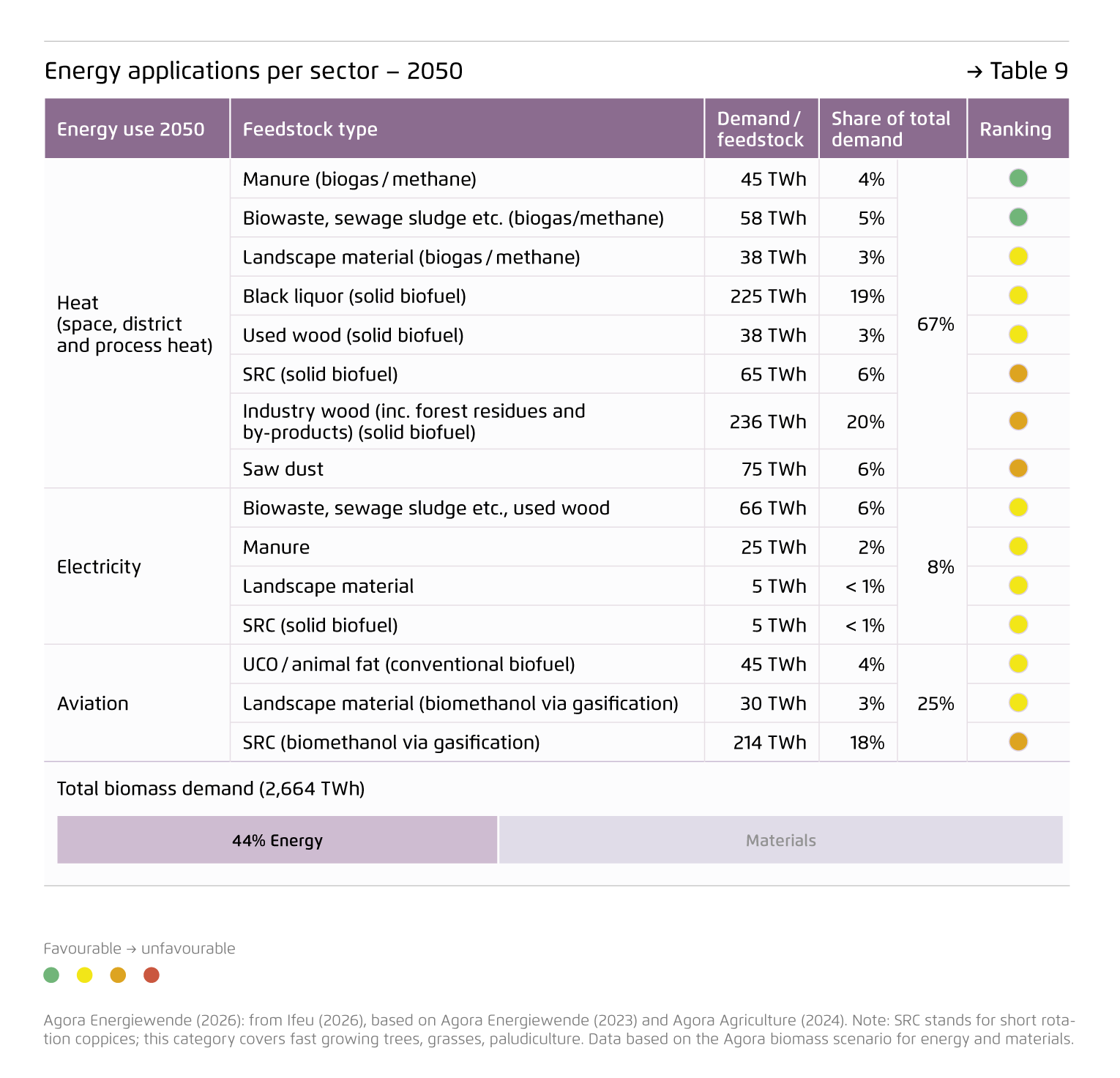
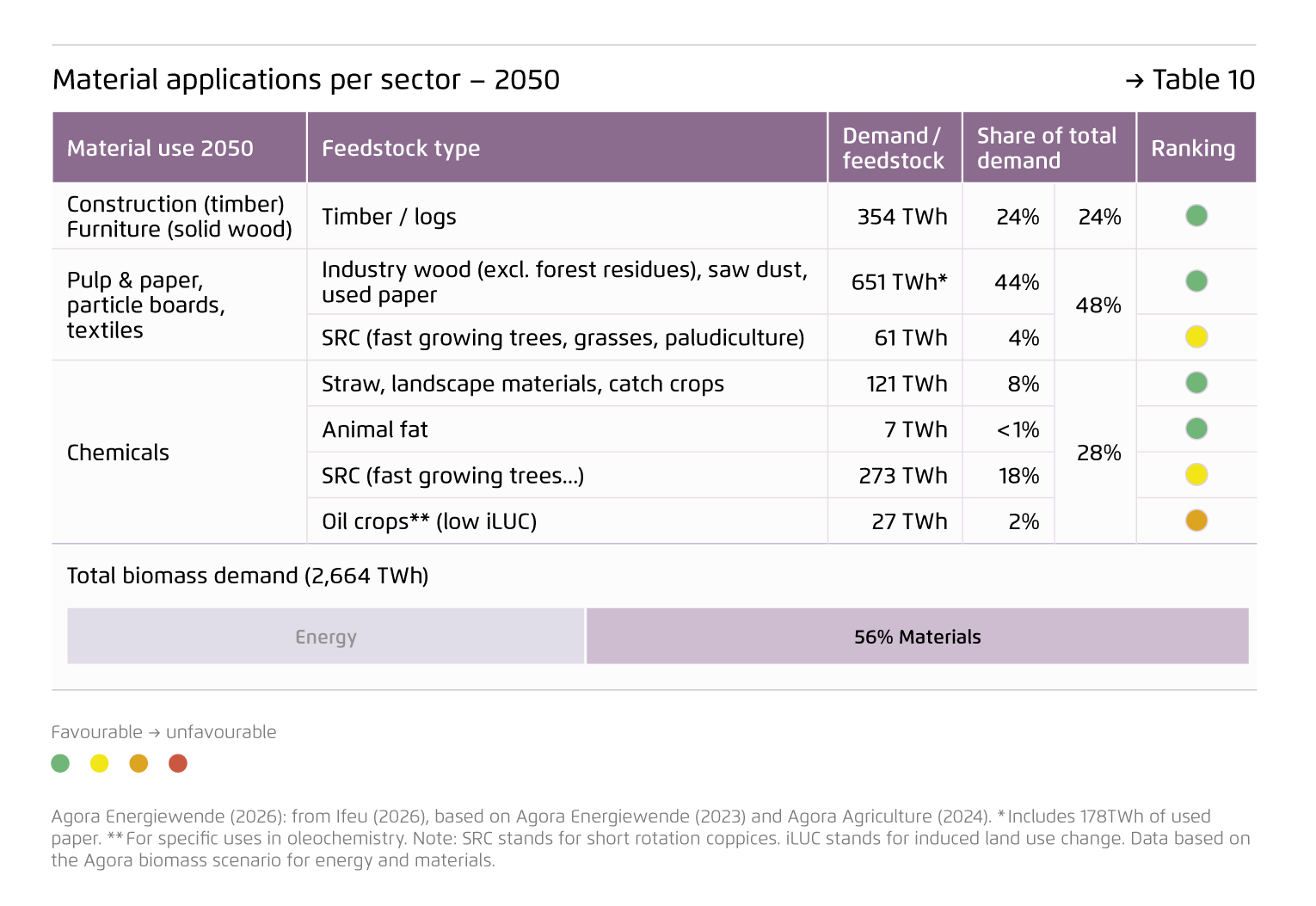
The scenario developed for this report foresees material use rising from 38% today to 56%. Key drivers include construction, furniture and fibre-based products (pulp and paper, particle boards, textiles) and a nine-fold growth in bio-based chemicals, from 47 TWh to 428 TWh. Energy use declines, shifting from heat and road transport towards back-up power and hard-to-electrify sectors like aviation, within strict limits.
-
Biomass supply has meaningful room to grow but realising this potential requires resilient forests and sustainable food systems.
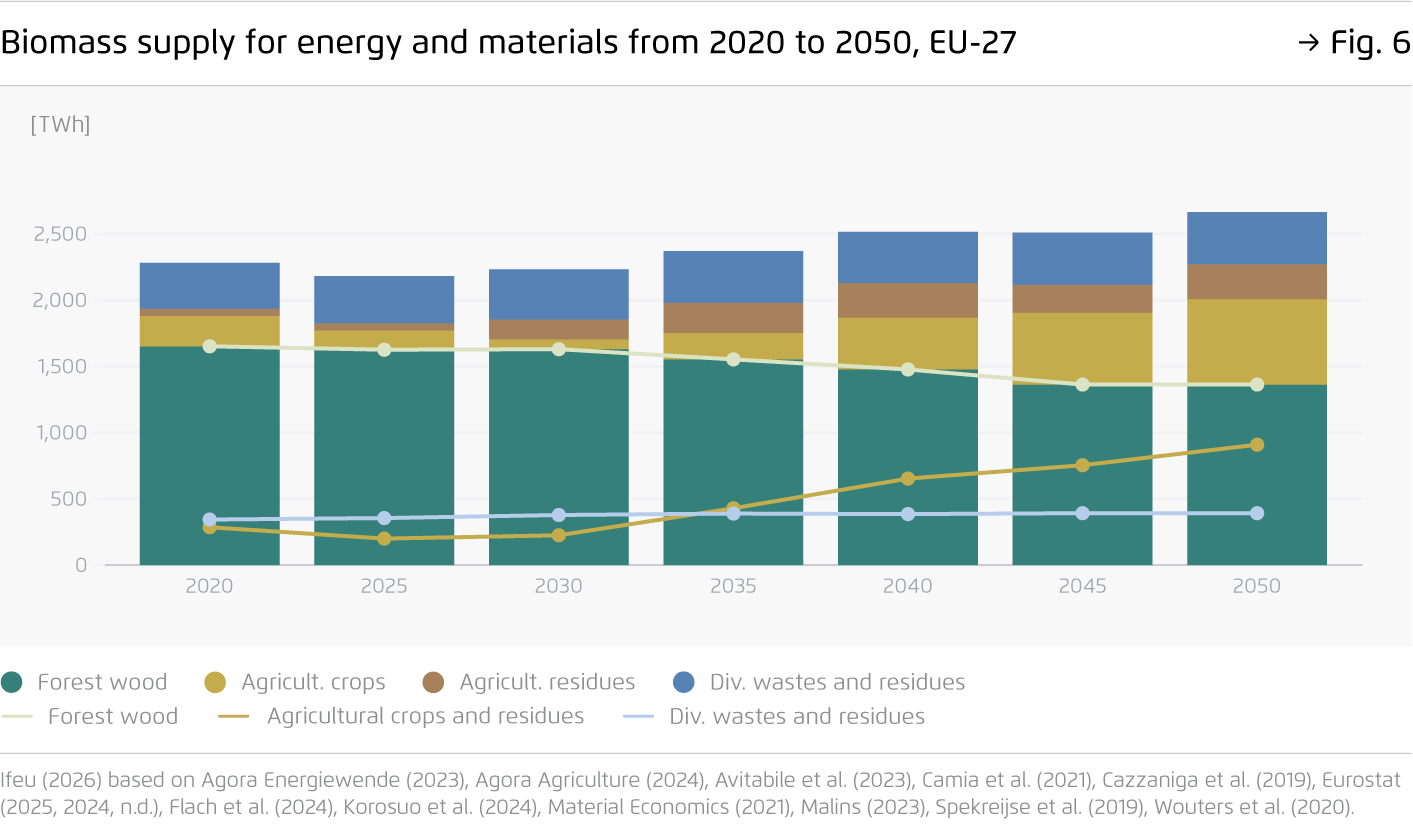
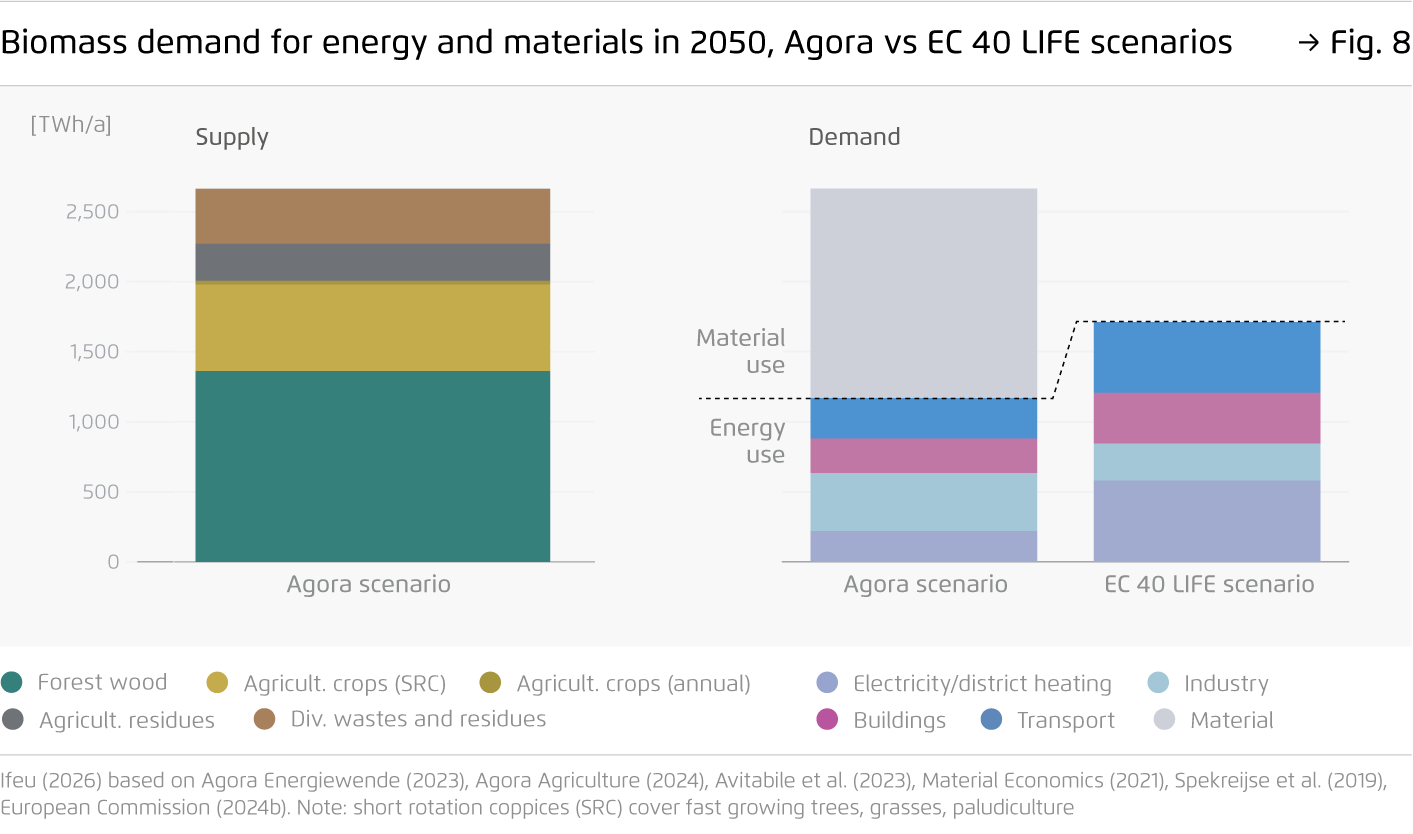
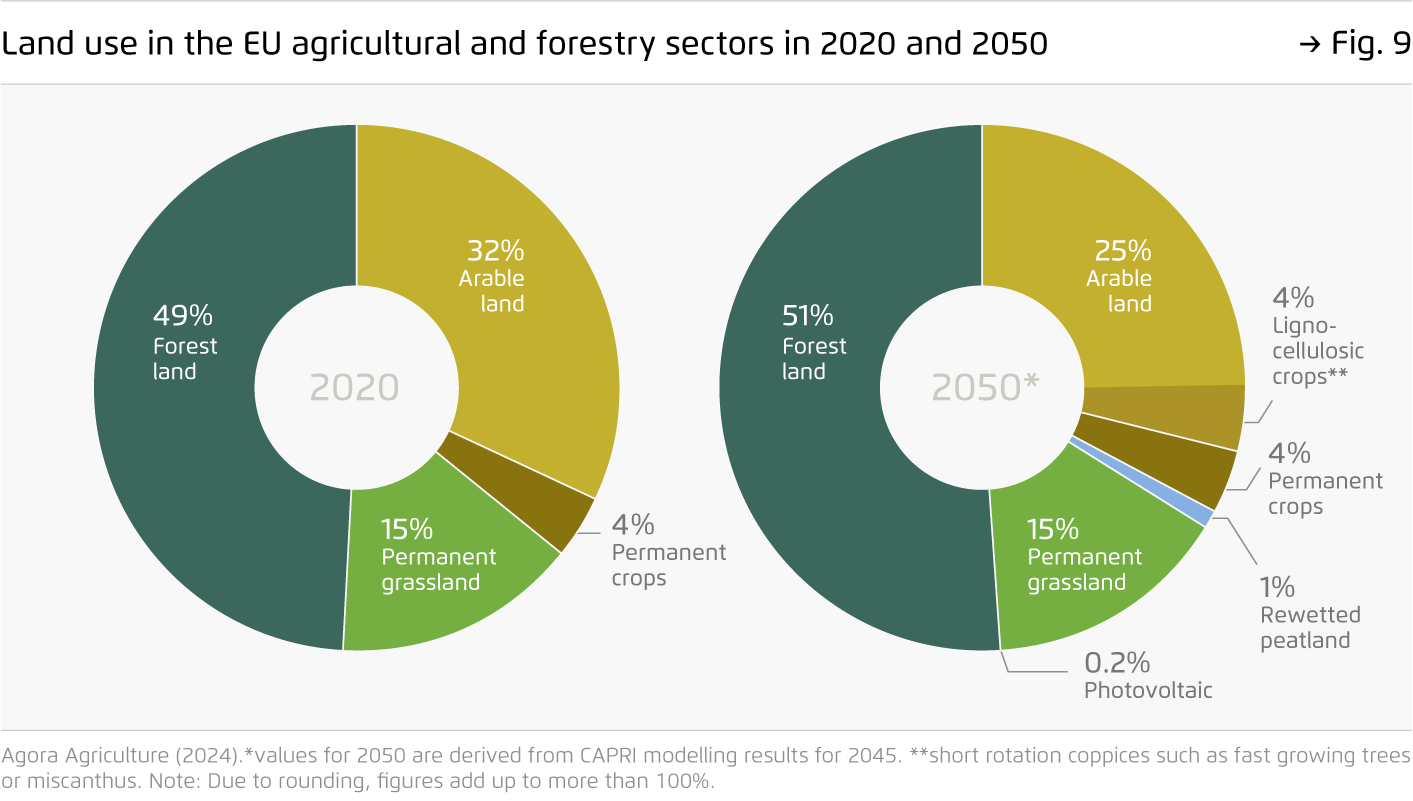
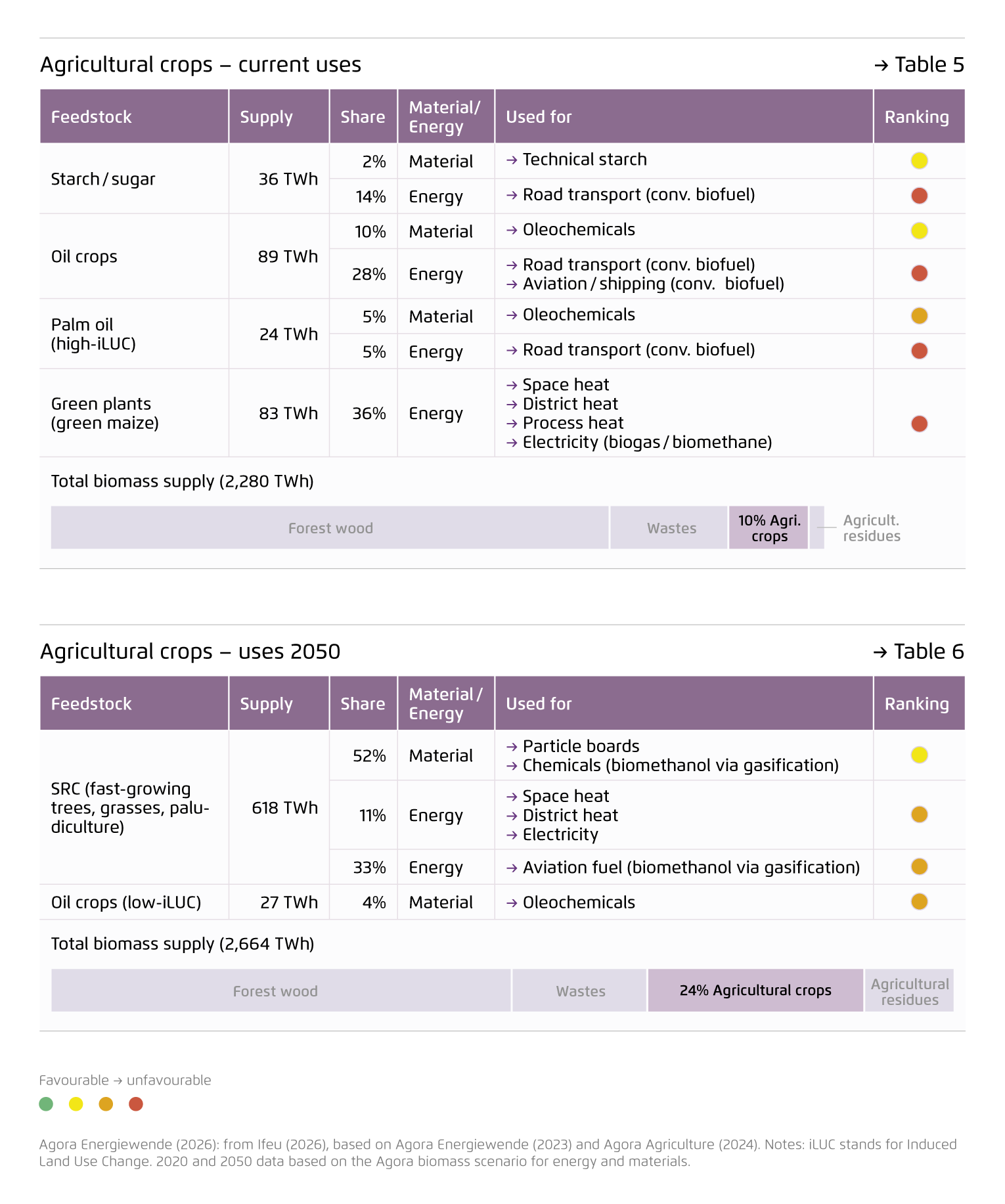
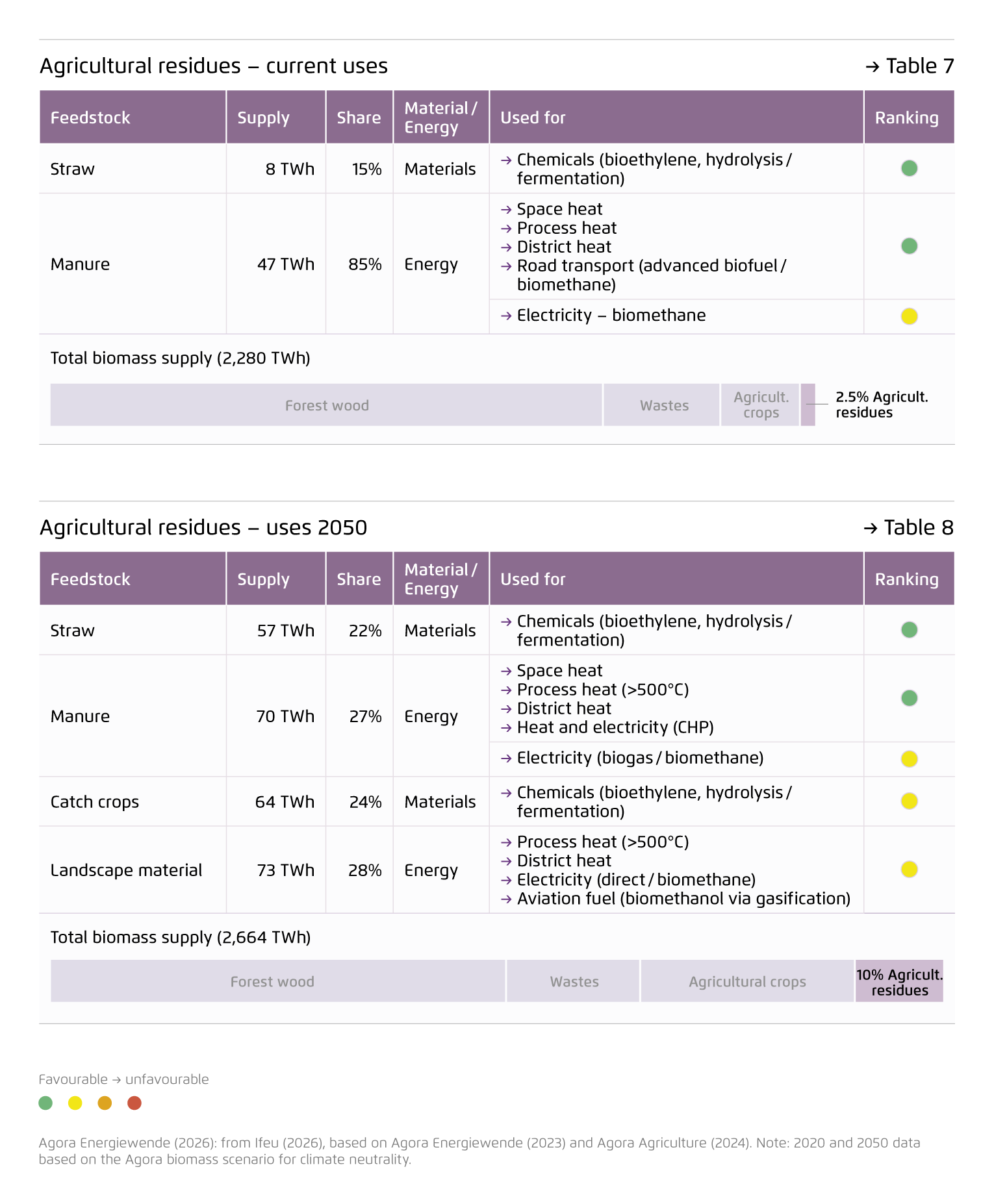
Supply can increase by 17% compared to today, driven largely by agriculture, through fast-growing trees, grasses and residues and can provide new income streams for farmers. Biogas production remains stable and increasingly relies on manure, biowaste and sewage sludge. Lignocellulosic feedstocks are used for higher value applications such as chemicals, opening new markets for bio-based products
-
Harnessing biomass’ full potential requires coherent policy aligning supply with high-value uses.
The EU’s post-2030 energy and climate framework is a chance to redirect demand and investments and advance lead markets for bio-based products. This shift requires scaling up electrification in road transport, buildings and industry and phasing out fossil fuel subsidies. With the right incentives and strong sustainability standards, strategic biomass use can unlock innovation and new business opportunities and make Europe more resilient.
Harnessing biomass for a resilient Europe
An optimised path for energy and materials in the post-2030 framework

Summary
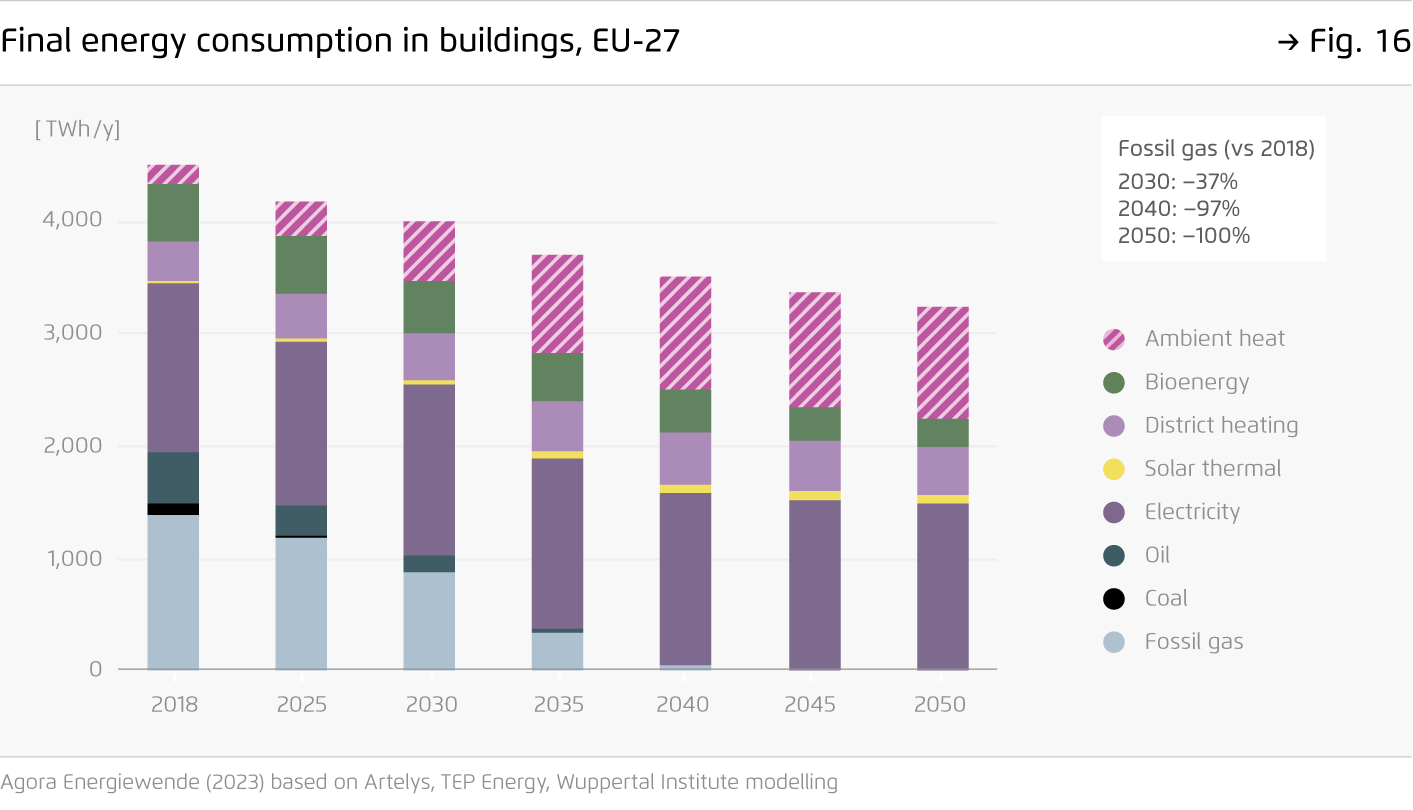
How can Europe optimise the use of its biomass while limiting pressure on land resources and mitigating impacts on food systems, climate and biodiversity? To that end, Agora provides a comprehensive overview of land-based biomass flows for energy and materials over time. Our scenario foresees material use rising from 38 percent today to 56 percent by 2050, driven by solid and fibre-based products (construction and furniture, particle boards, pulp and paper, textiles), and a nine-fold increase in bio-based chemicals. The use of biomass for energy declines, moving away from heat and road transport towards back-up power and hard-to-electrify sectors like aviation, within strict limits. Biomass supply increases by 17 percent compared to today, based on enhanced forests resilience and a transition to sustainable food systems. This growth is driven largely by agriculture, through fast-growing trees, grasses and residues, providing new income streams for farmers. This shift requires scaling up electrification in road transport, residential and industrial heat and phasing out fossil fuel subsidies.
Key findings
Bibliographical data
Downloads
-
Impulse
pdf 3 MB
Harnessing biomass for a resilient Europe
An optimised path for energy and materials in the post-2030 framework
All figures in this publication
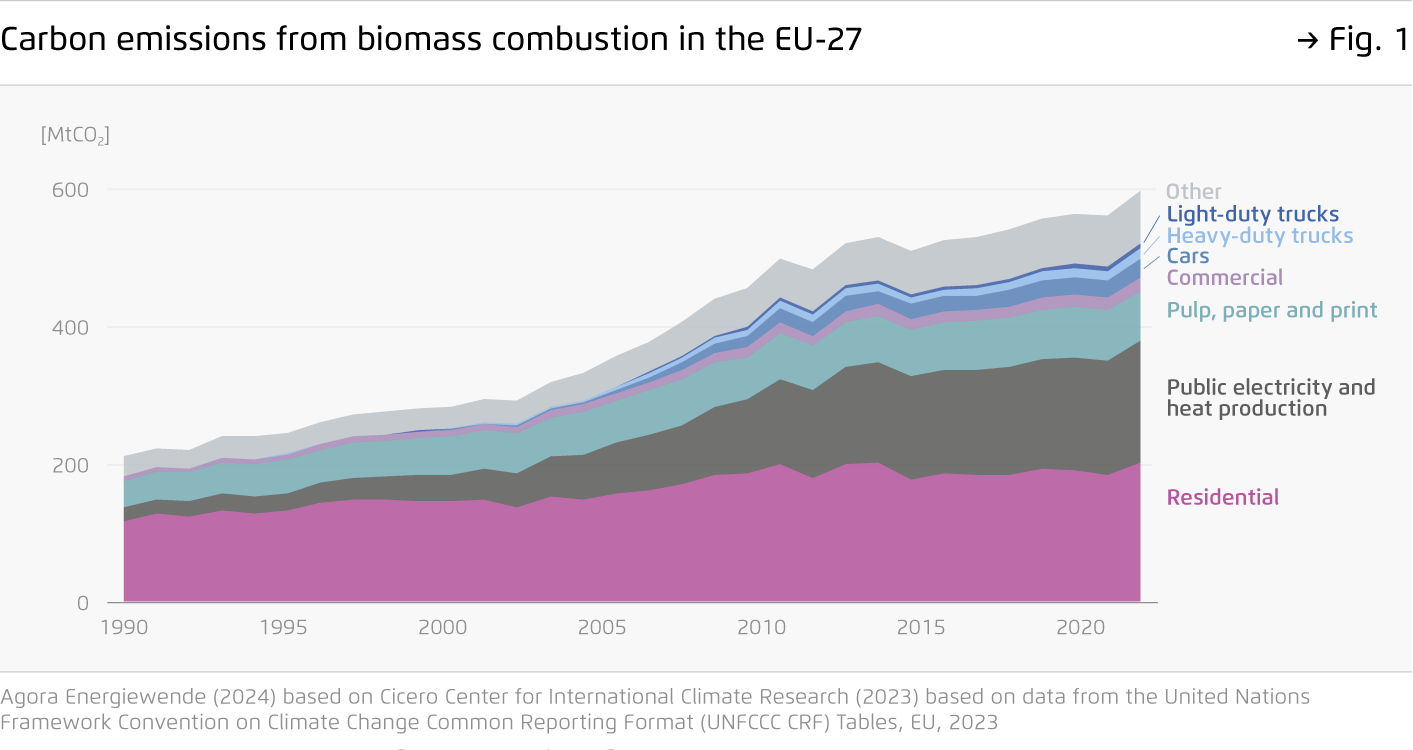
Carbon emissions from biomass combustion in the EU-27
Figure 1 from Harnessing biomass for a resilient Europe on page 8
Share:

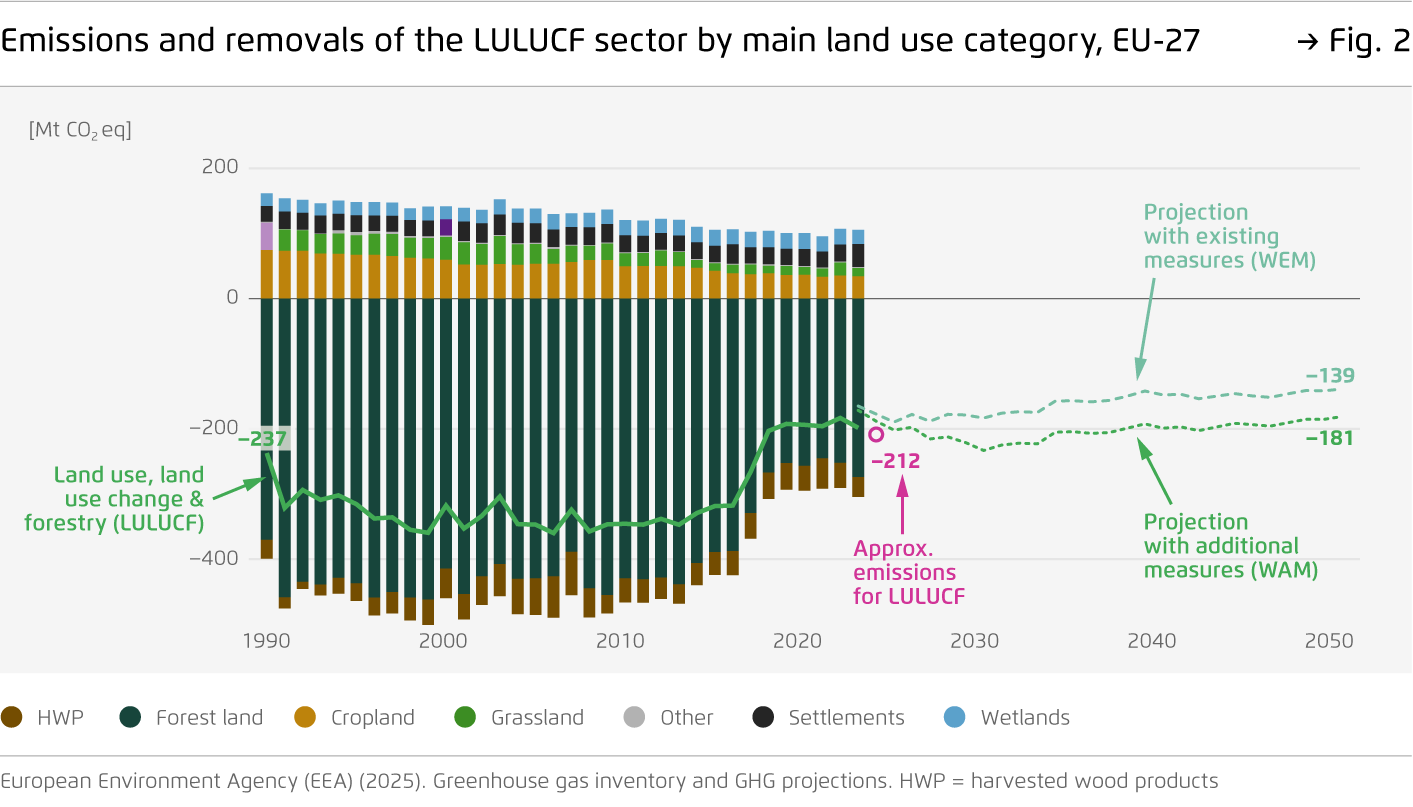
Emissions and removals of the LULUCF sector by main land use category, EU-27
Figure 2 from Harnessing biomass for a resilient Europe on page 9
Share: