-
Distribution grids need to become the “first mile” of the power system to support economic growth and the energy transition.
Representing over 90 percent of grid infrastructure, they have traditionally been seen as the “last mile”, merely delivering electricity generated at the transmission level to consumers. This model needs fundamental modernisation today, as distribution grids struggle to absorb growing renewable supply and meet surging electricity demand from electric vehicles, industry processes, cooling and heating systems, and data centres.
-
To fulfil their new role, distribution grids need to evolve from passive, one-way delivery infrastructure into digitally enabled, actively managed systems.
This requires coordinated action across three interconnected policy domains: grid planning that anticipates future supply and demand, grid deployment that streamlines administrative processes to integrate new assets at speed and scale, and grid operations that unlock flexibility from distributed energy resources (DERs). Stronger transmission-distribution coordination is also essential to enable the operation of a decentralising power system. Digitalisation is the common foundation for these reforms to deliver their full potential.
-
Grid governance reform is the key to scaling proven grid modernisation technologies.
The technical solutions for active grid management are proven and deployable today. Their uptake depends upon clear utility mandates, incentives, and regulatory and investment frameworks. Targeted reform can align utility actions with the public interest and channel the required investment in ways that prioritise performance and the leveraging of consumer-owned resources.
-
Activating consumer-owned flexibility can accelerate grid modernisation and significantly reduce the need for grid expansion.
As distributed energy resources (DERs) scale, countries in early phases of deployment have the opportunity to leapfrog to decentralised, consumer-centric systems. By putting the right frameworks in place, countries can design systems that actively leverage these resources from the outset, helping to avoid congestion costs and delays seen in frontrunner markets, and capturing the full affordability, reliability and sustainability benefits of DERs.
From last mile to first mile
Policy priorities for modernising electricity distribution grids
Summary
Electricity distribution grids have long been seen as the “last mile” of the power system, simply delivering electricity to consumers. Representing more than 90 percent of global grid infrastructure, they now face rising pressure from distributed renewables, batteries, electric vehicles and growing electricity demand. To manage these constraints, they must become the power system’s “first mile”: digitally enabled, actively managed systems at the heart of the energy transition.
This brief sets out priority actions across five interconnected policy areas: planning and investment, permitting and connections, flexibility, digitalisation, and transmission-distribution coordination. The technical solutions exist. What is needed now is governance reform from clear mandates, incentives, to regulatory frameworks that align utility action with the public interest. Countries in early phases of DERs deployment can leapfrog to consumer-centric systems, avoiding the grid congestion costs and delays seen in frontrunner markets.
Distribution grids will define whether the energy transition succeeds. Modernising them demands early action, sustained investment, and coordinated reform across all levels of the power system.
Key findings
Bibliographical data
Downloads
-
Policy Brief
pdf 504 KB
From last mile to first mile
Policy priorities for modernising electricity distribution grids
All figures in this publication
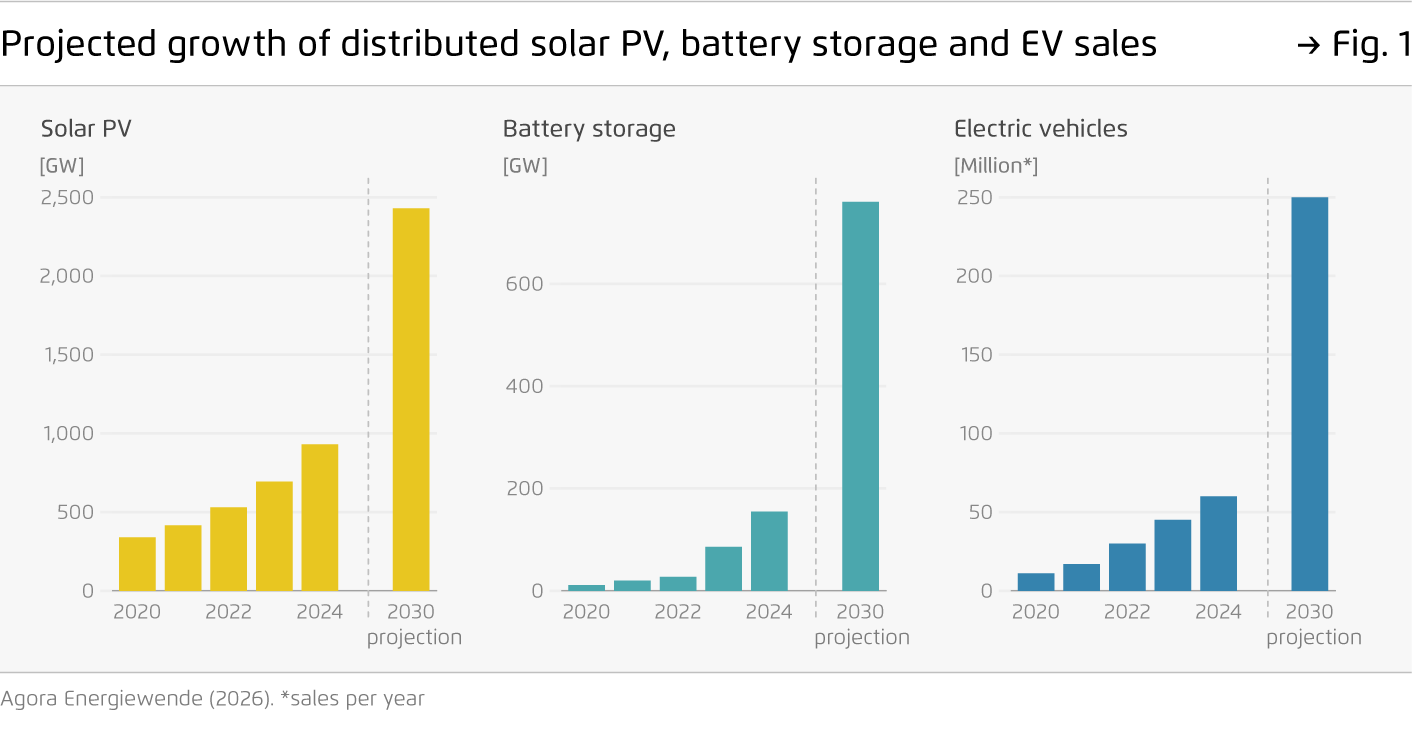
Projected growth of distributed solar PV, battery storage and EV sales
Figure 1 from From last mile to first mile on page 6
Share:

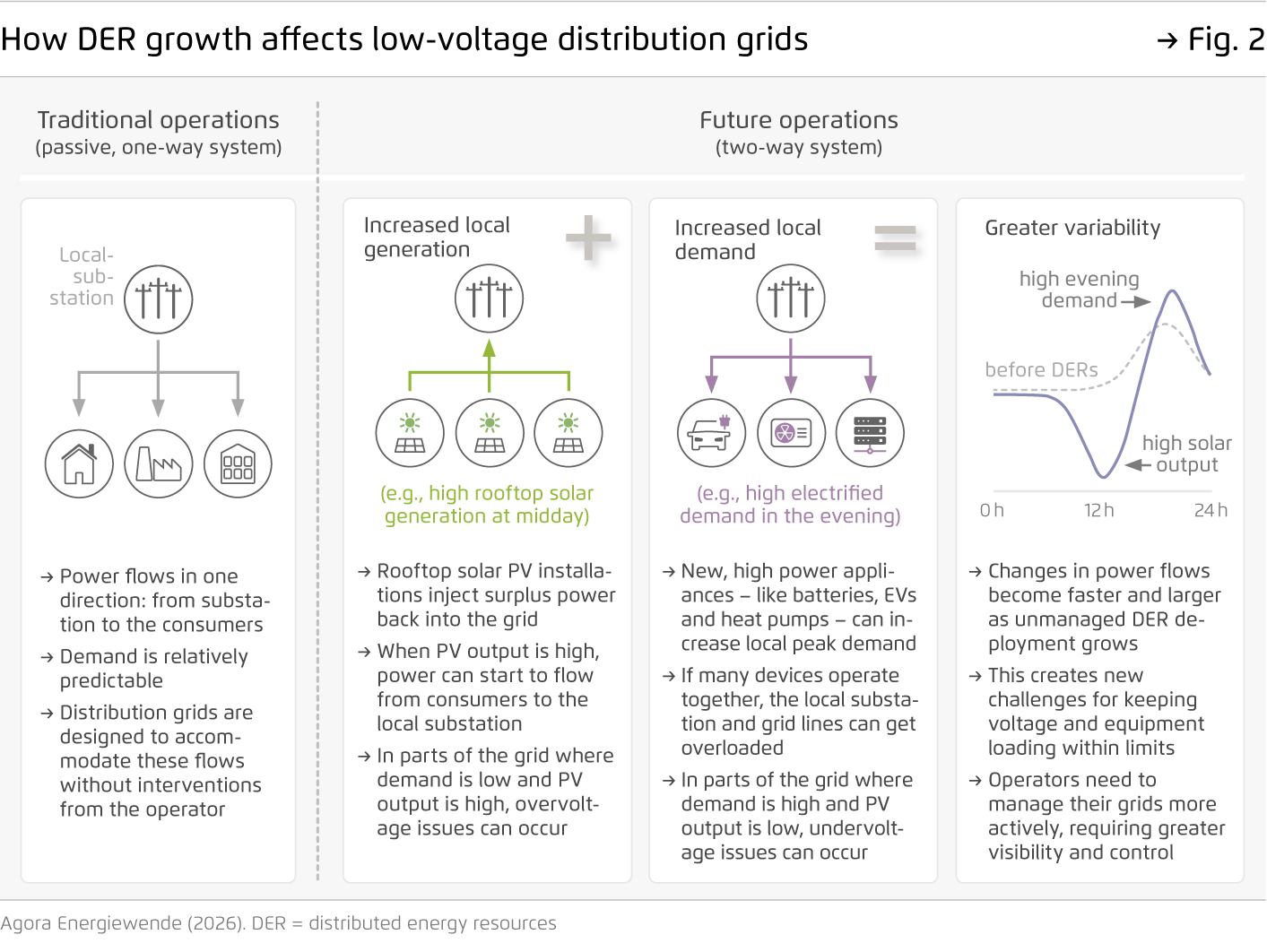
How DER growth affects low-voltage distribution grids
Figure 2 from From last mile to first mile on page 7
Share: