-
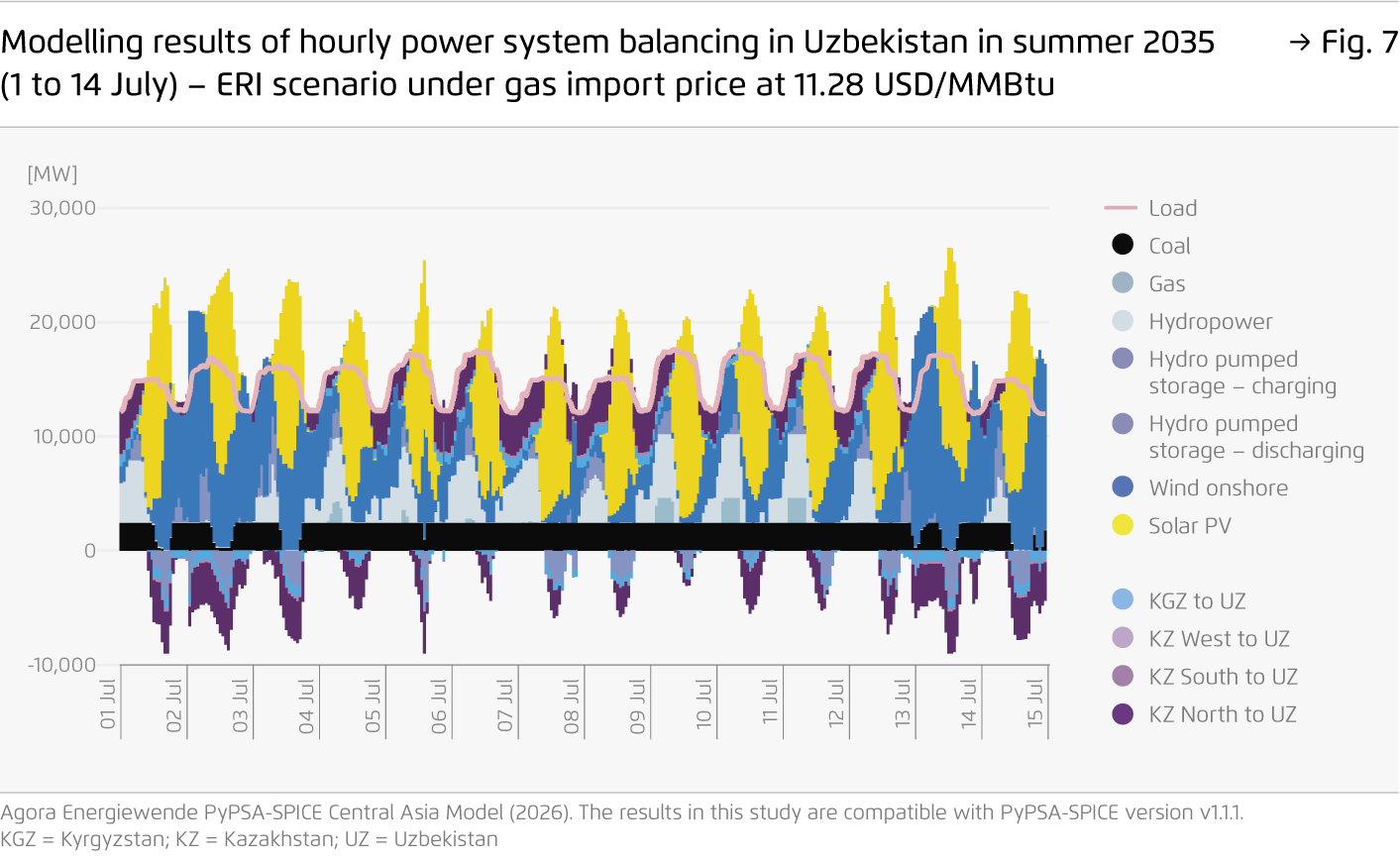
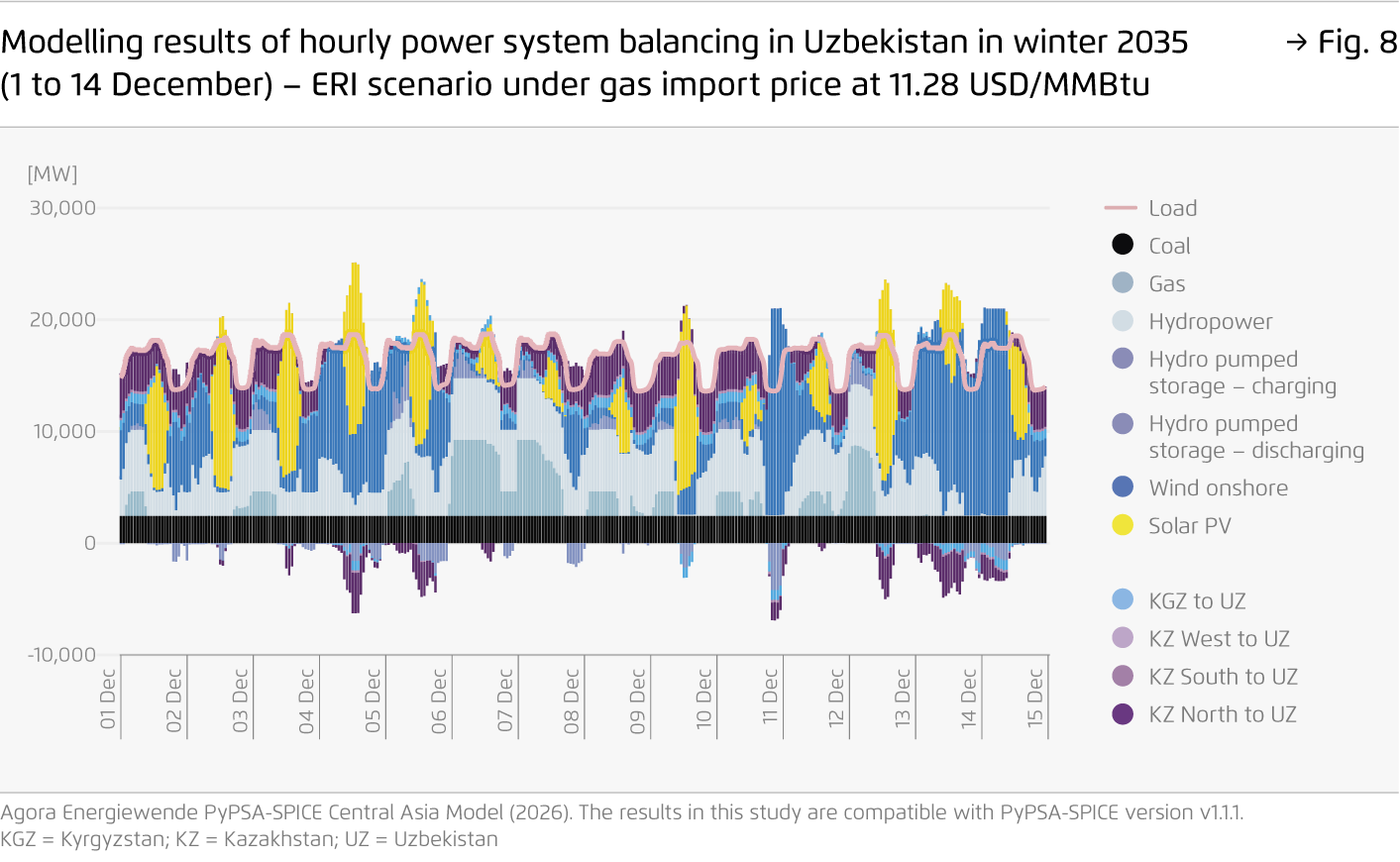
Central Asia’s renewable resources are complementary, providing a strong foundation for a more diversified and secure regional electricity mix.
The region’s diverse wind, solar and hydropower potential offers a shared economic advantage that can lower fossil fuel dependence. Combining these renewable resources with different seasonal and geographic profiles can enhance system resilience and support higher shares of renewable energy over the long term.
-
Central Asia can strengthen energy security and reduce costs through deeper regional power system integration.
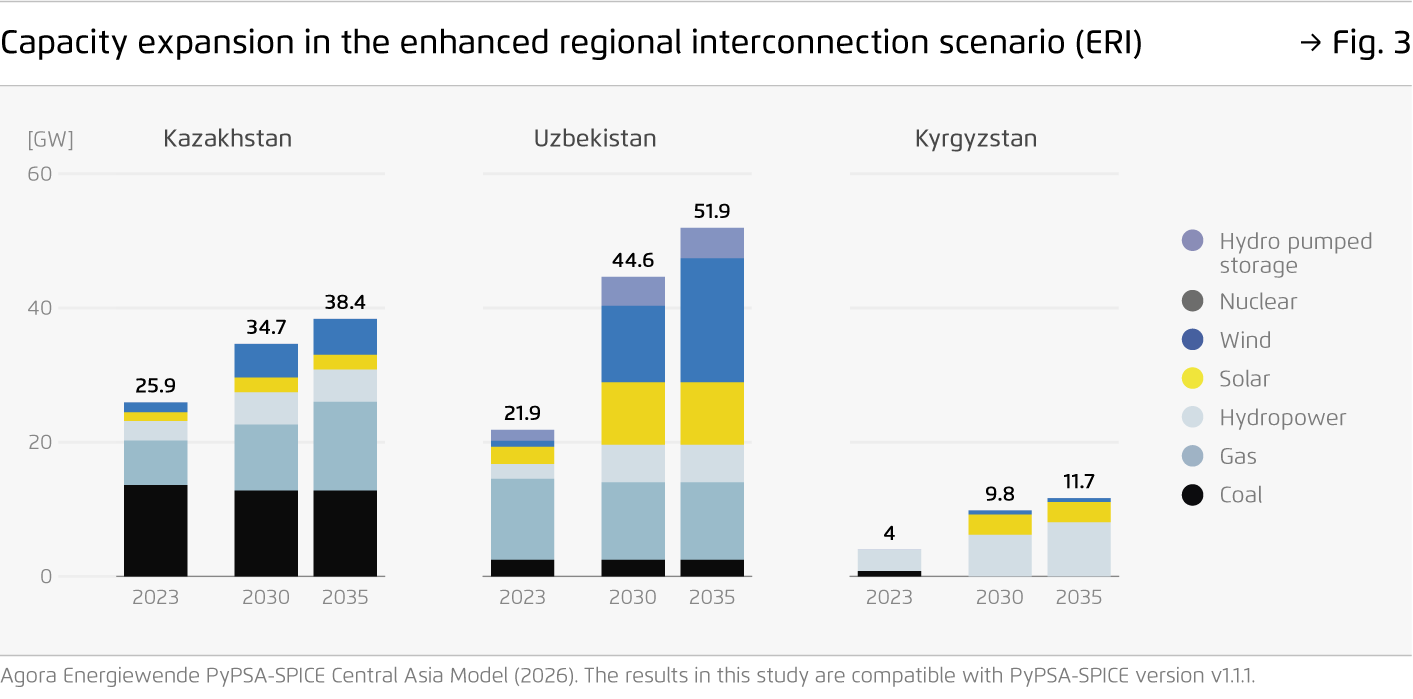
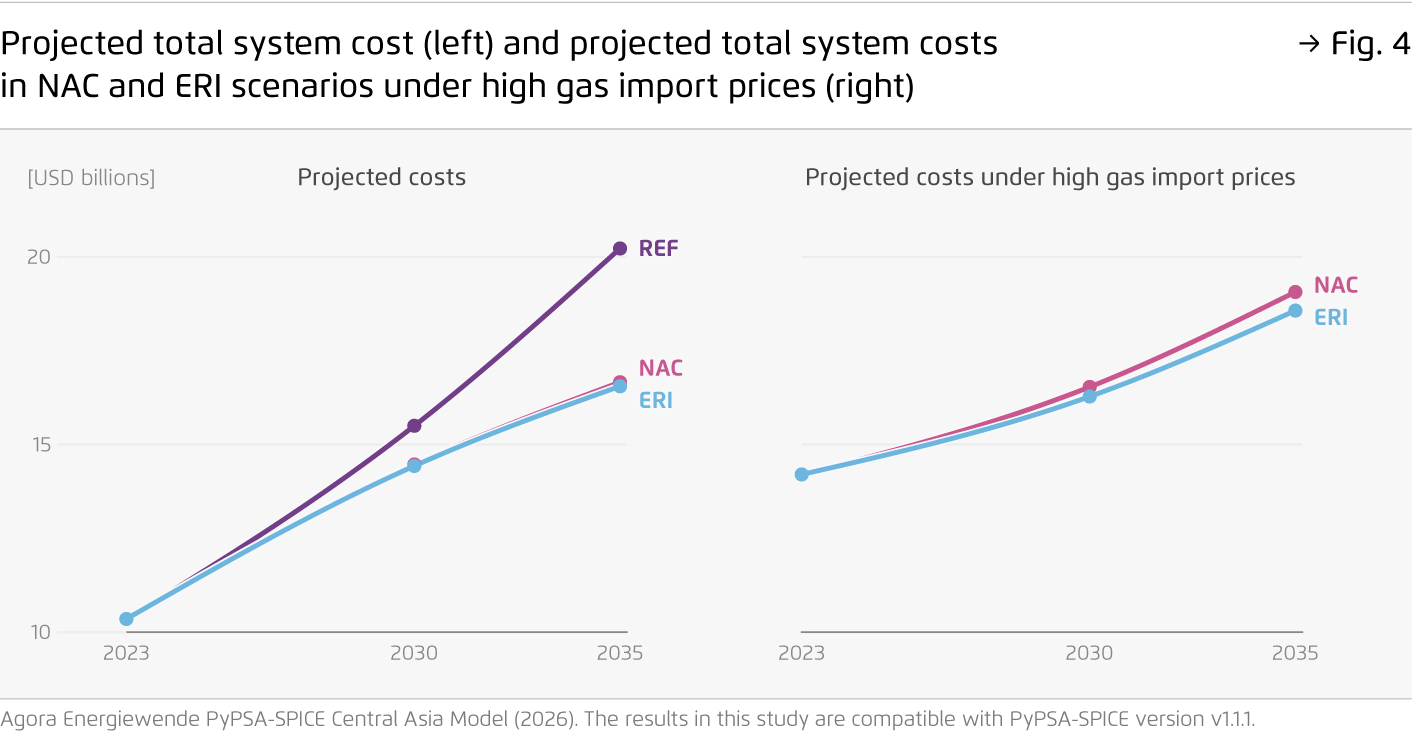
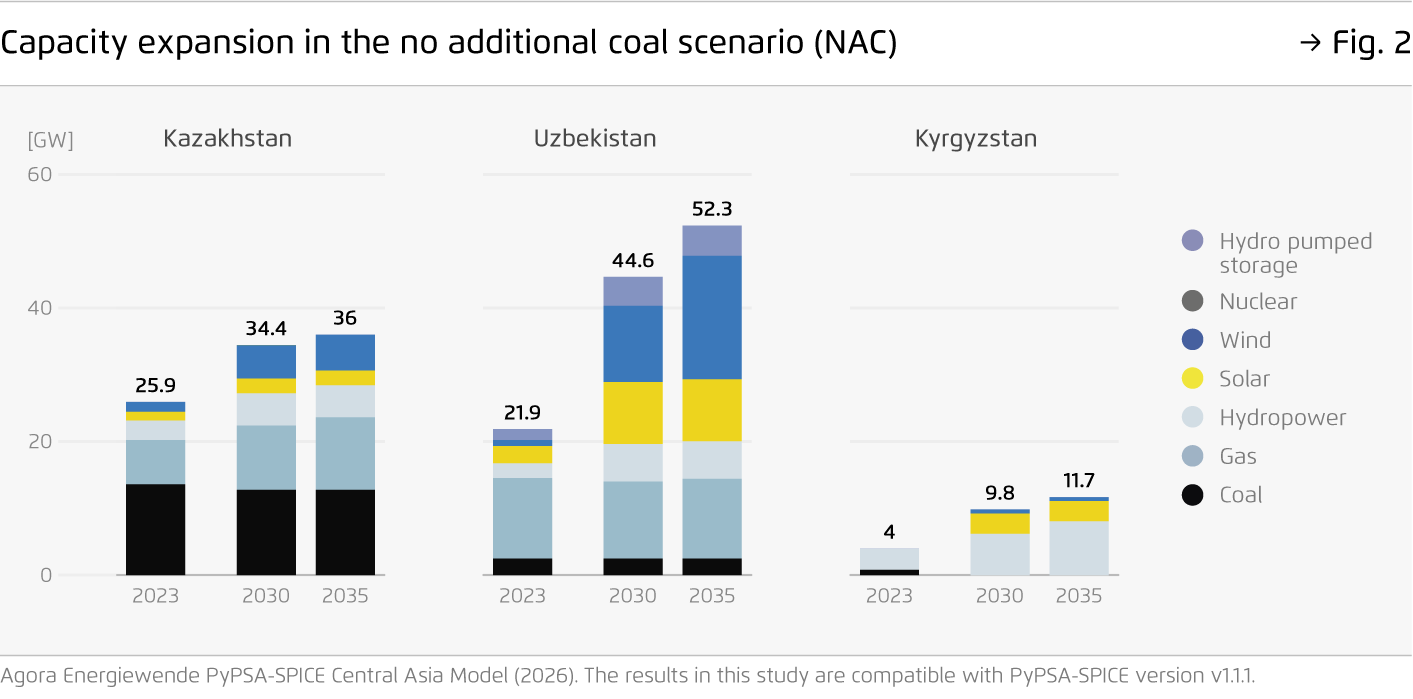
Recent efforts to revitalise cross-border electricity cooperation in the region have accelerated, following decades of limited progress since the dissolution of the Soviet Union. In scenarios with higher renewable deployment and no additional coal capacity, deeper regional integration could reduce annual energy costs by around USD 3.5 billion, or 18 percent, by 2035 compared with current plans.
-
Expanded cross-border transmission can improve regional balancing and unlock more efficient use of existing generation resources.
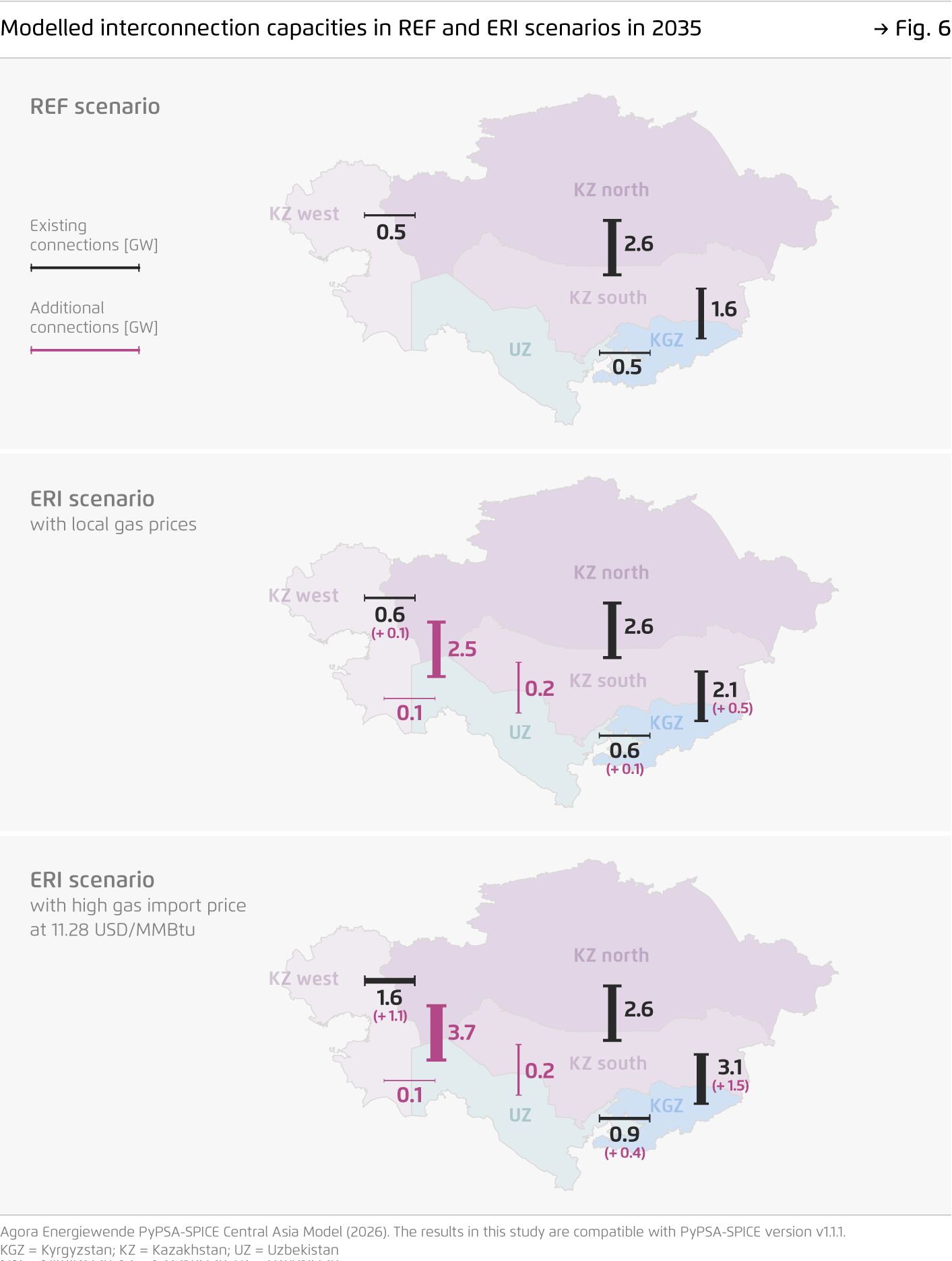
With Kazakhstan’s power mix relying on coal, Uzbekistan’s – on gas and Kyrgyzstan’s – on hydropower, stronger interconnections would enable more efficient dispatch across the region. Clear economic benefits would thus arise from constructing a new transmission line between northern Kazakhstan and Uzbekistan and strengthening transmission links between Kazakhstan and Kyrgyzstan. These gains increase further as variable renewable generation expands and gas prices rise, while allowing existing coal, gas and renewable generation assets to operate more flexibly across the region.
-
Deeper coordination of energy planning and market frameworks can best strengthen resilience and insulate Central Asia from volatile international gas prices.
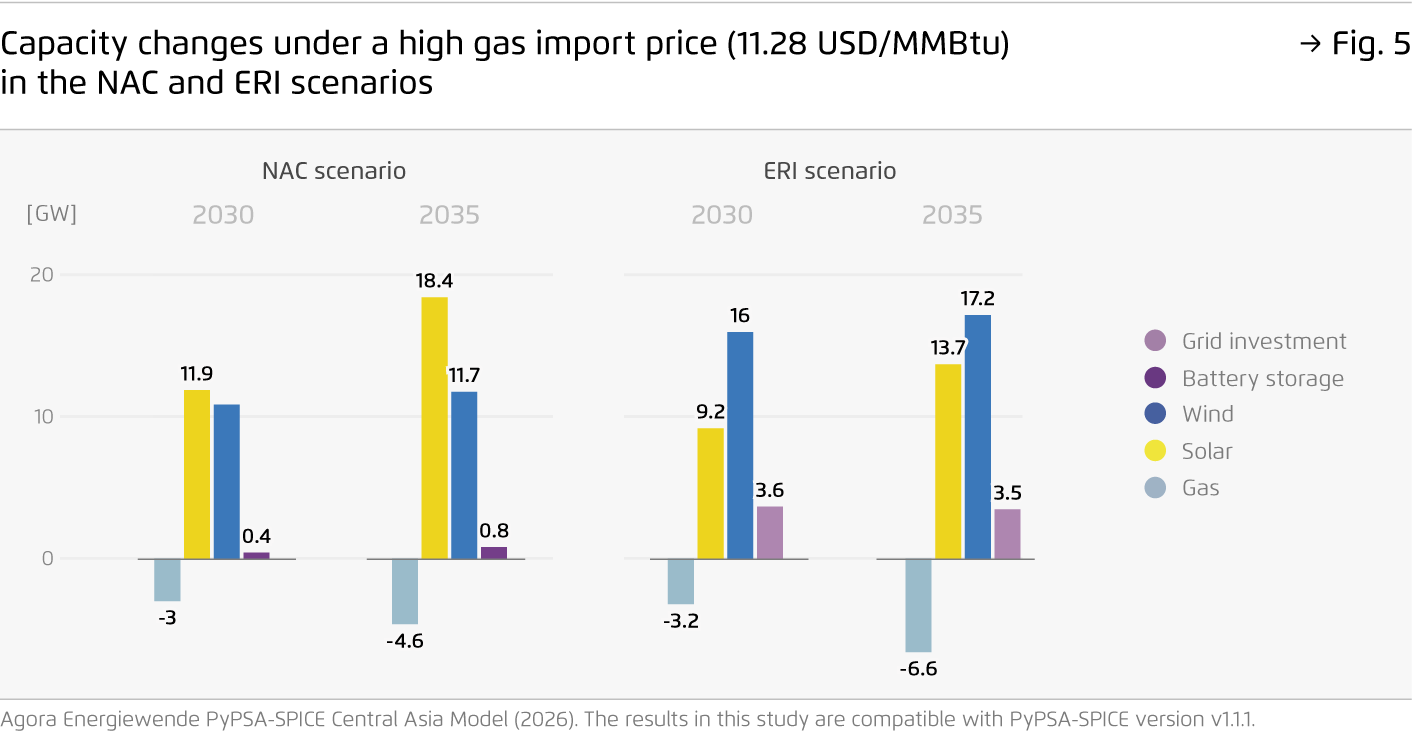
Subsidised domestic gas prices currently support the economic attractiveness of gas-based pathways in Kazakhstan and Uzbekistan in the short term. However, tightening domestic supply balances, increasing import dependence and the absence of domestic gas resources in Kyrgyzstan underscore the importance of coordinated planning, system operation and investment across the region – which could also enable Central Asia to emerge as a potential electricity exporter to South Asia over the longer term.
Cross-border power system integration in Central Asia
Insights from the PyPSA-SPICE Central Asia model
Summary
This policy brief examines how deeper cross-border power system integration can support the energy transition in Central Asia while reducing costs and strengthening energy security. Based on detailed modelling of the electricity systems of Kazakhstan, Uzbekistan and Kyrgyzstan, the analysis explores how enhanced regional cooperation can unlock the complementary potential of wind, solar and hydropower resources across the region.
The findings show that a more integrated Central Asian power system could reduce annual energy system costs by around USD 3.5 billion (18 percent) by 2035 compared to current development plans. Stronger transmission interconnections and coordinated system operation would enable more efficient use of existing generation assets, improve the integration of renewable energy and reduce exposure to fuel price volatility, particularly in natural gas markets.
The policy brief provides evidence-based recommendations for governments, regulators and development partners seeking to accelerate renewable energy deployment, modernise electricity infrastructure and strengthen regional electricity trade. It highlights how coordinated investment in transmission networks and market integration can help transform Central Asia into a more resilient, affordable and low-carbon energy system.
The full dataset used for this study is available at GitHub: https://github.com/agoenergy/pypsa-spice-central-asia-data. Output data is available at https://cloud.sefep.eu/s/CNMGSkJ6HkNjfSL.
Key findings
Bibliographical data
Downloads
-
Policy Brief
pdf 2 MB
Cross-border power system integration in Central Asia
Insights from the PyPSA-SPICE Central Asia model
-
Аналитическая записка
pdf 2 MB
Трансграничная интеграция энергосистем в Центральной Азии
Основные выводы модели PyPSA-SPICE для Центральной Азии
All figures in this publication
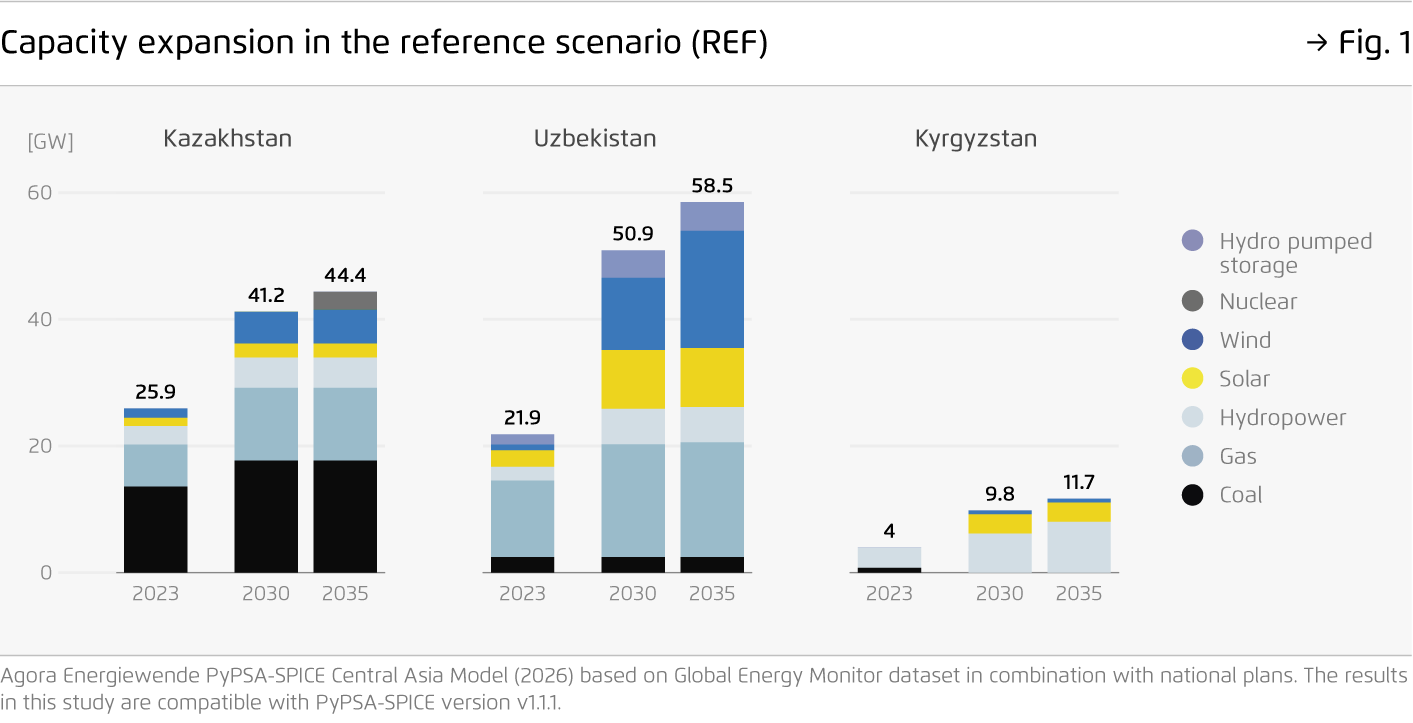
Capacity expansion in the reference scenario (REF)
Figure 1 from Cross-border power system integration in Central Asia on page 8
Share:

Capacity expansion in the no additional coal scenario (NAC)
Figure 2 from Cross-border power system integration in Central Asia on page 9
Share: